Real places are the index of this story. Every space you move through is also a chapter: the conversations that took place there, the questions that were asked, the materials that were produced. Navigate the space, click the icons, open the story.
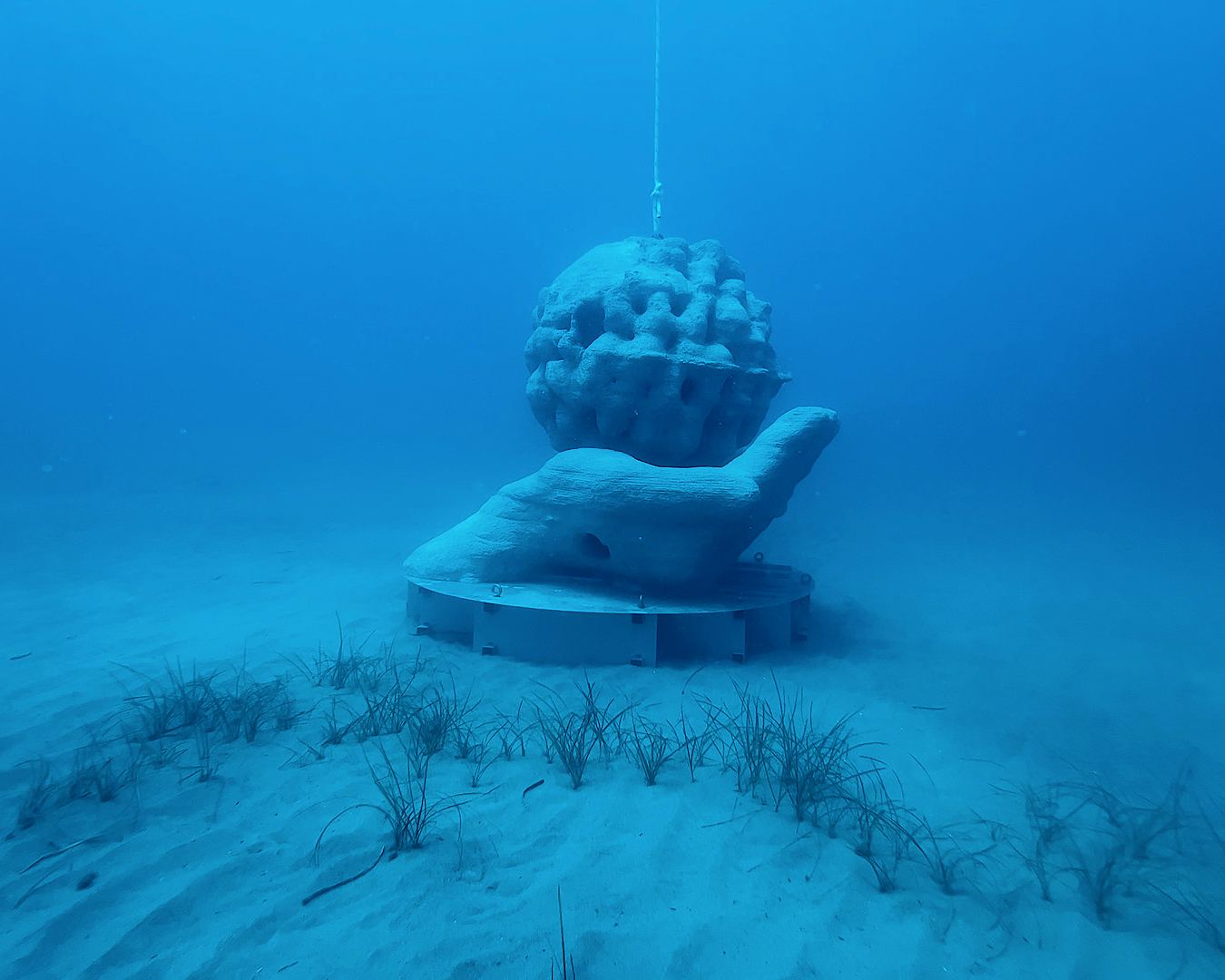
Posidonia Art Reef is a participatory initiative developed within PartArt4OW, focused on creating a sculpture to be installed on the seabed off Bogliasco.
Designed as an artificial reef, the work aims to enhance biodiversity, discourage bottom trawling by acting as an obstacle to nets, and raise awareness of the need to care for the Mediterranean Sea.
Every project about the sea begins on land. Before the first dive, before the sculpture touches the water, there are people who come together to imagine what could live beneath the surface. That is how Posidonia Art Reef began: through ideas, drawings, and conversations about how art can help a coastal town care for its sea. The project is part of PartArt4OW, an accelerator supporting creative, community-based approaches to ocean protection. Our aim was to build a small underwater museum in Bogliasco — together with the people who would see it, study it, and protect it.
Chapter 01 — Workshop
SPAZIO MAR, BOGLIASCO
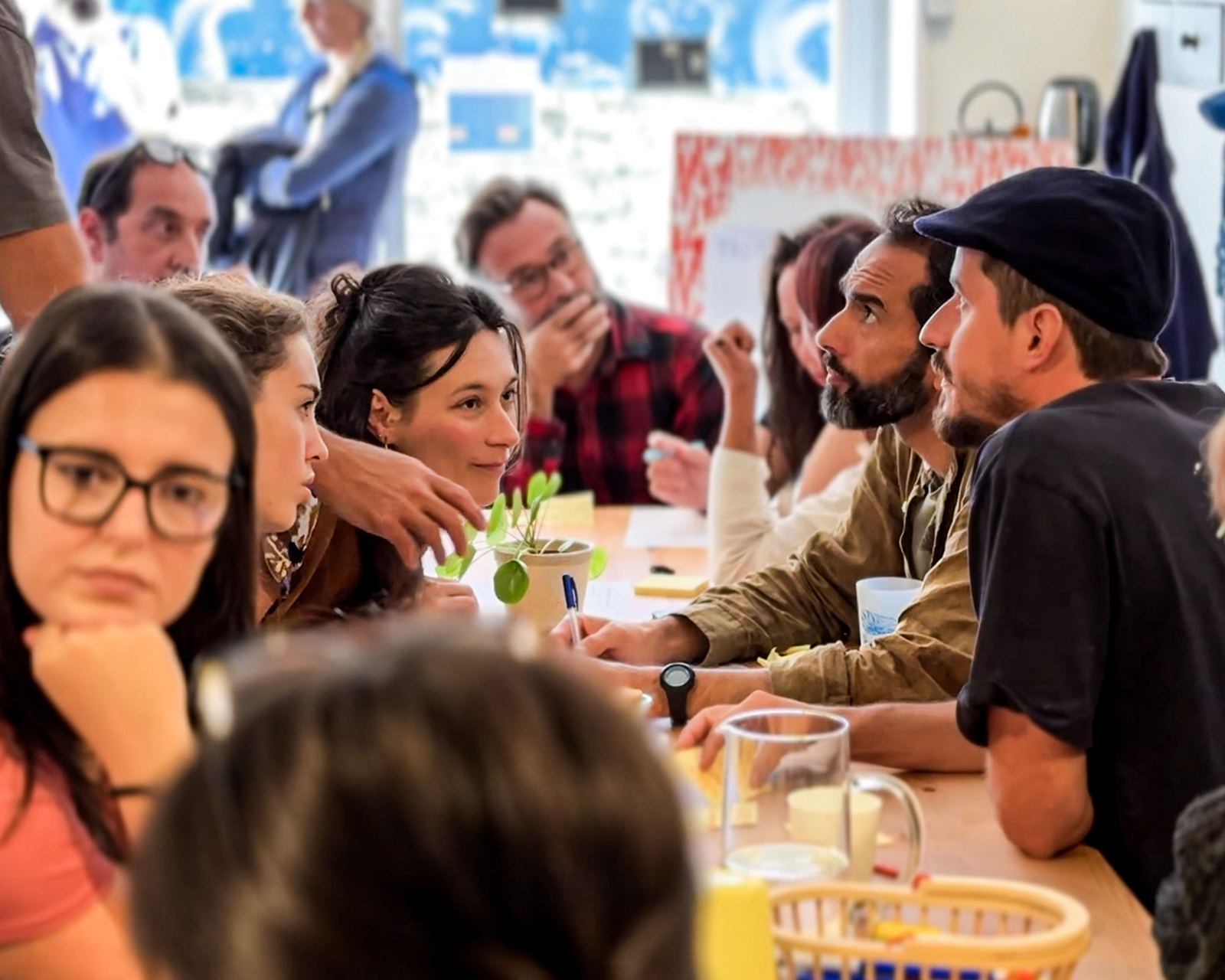
The first public workshop took place at SpazioMAR – Movimento Arte Ritrovo, in the heart of Bogliasco. Families, teachers, marine biologists, and divers sat side by side to imagine what the underwater museum might look like.
The session opened with a presentation on the critical challenges facing our sea: threats to biodiversity, bottom trawling, and the loss of Posidonia meadows. We then introduced the concept of sculpture for marine regeneration — what an artificial reef is, how it works, why art can become habitat — and the participatory process that would lead to the selection of the work to be installed.
From there, a collective dialogue began: what shapes evoke protection? What does the sea of Bogliasco ask of those who inhabit it? The responses and suggestions that emerged during that first session became the living material to be carried into subsequent workshops — seeds of a process still unfolding.
"A collective map of ideas — many voices describing one coastline."
Chapter 02 — Workshop
CLUB NAUTICO, BOGLIASCO
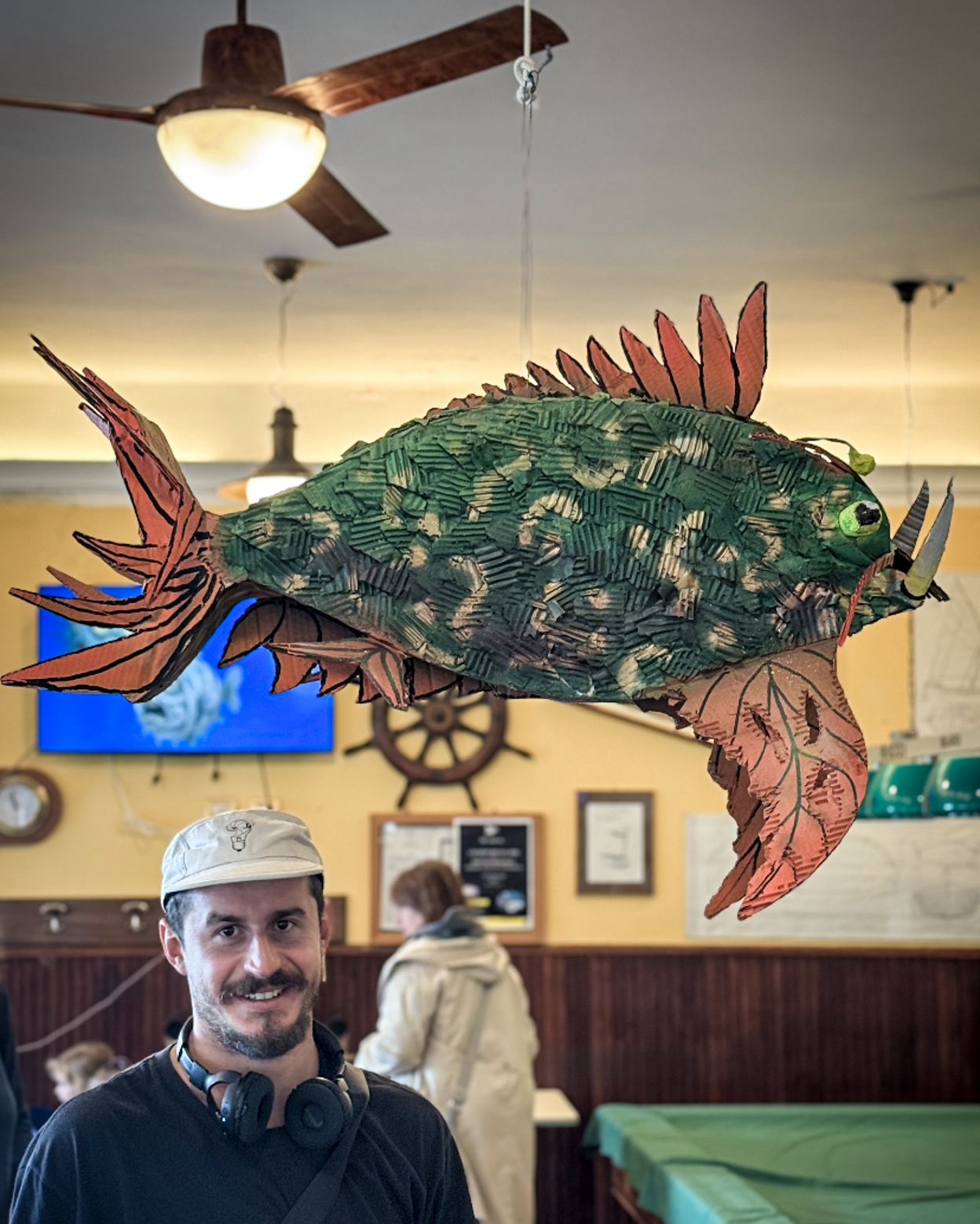
The second workshop took place at the Club Nautico di Bogliasco in a playful atmosphere. The session brought together a new mix of participants — sailors, local children, and curious visitors — continuing the dialogue that had begun at SpazioMAR.
The workshop activities continued here, deepening the collective reflection on what the underwater museum could become and what role the local community would play in its development.
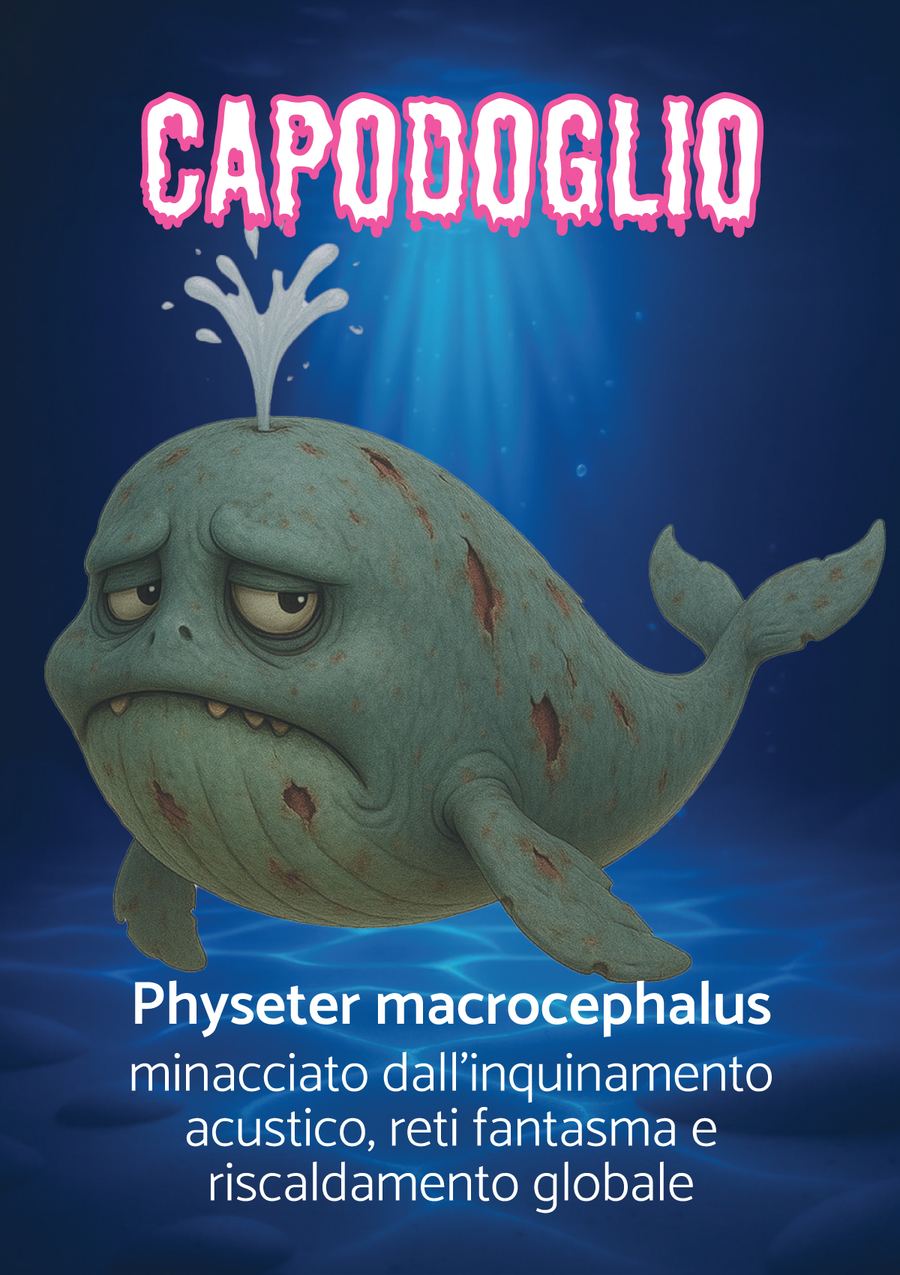
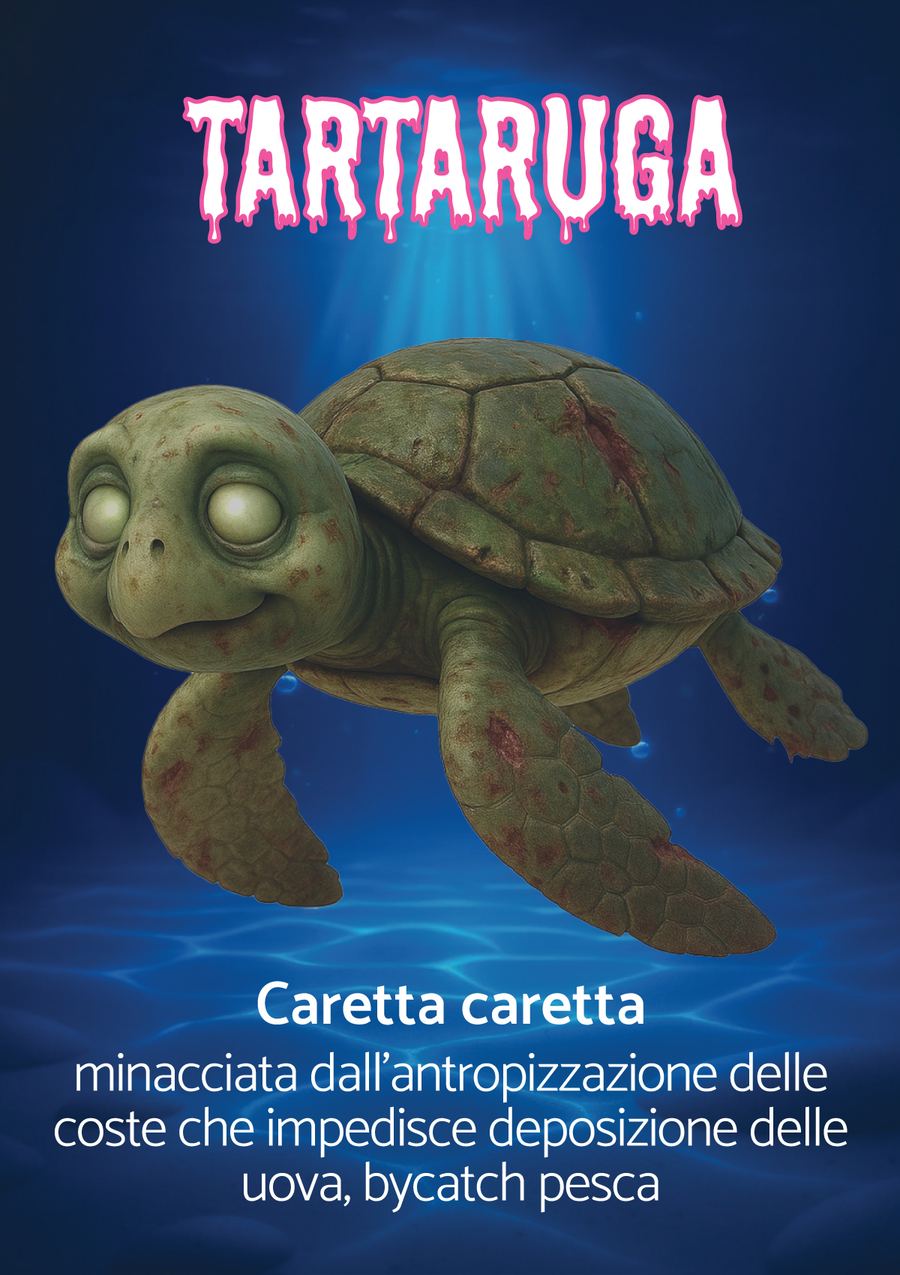
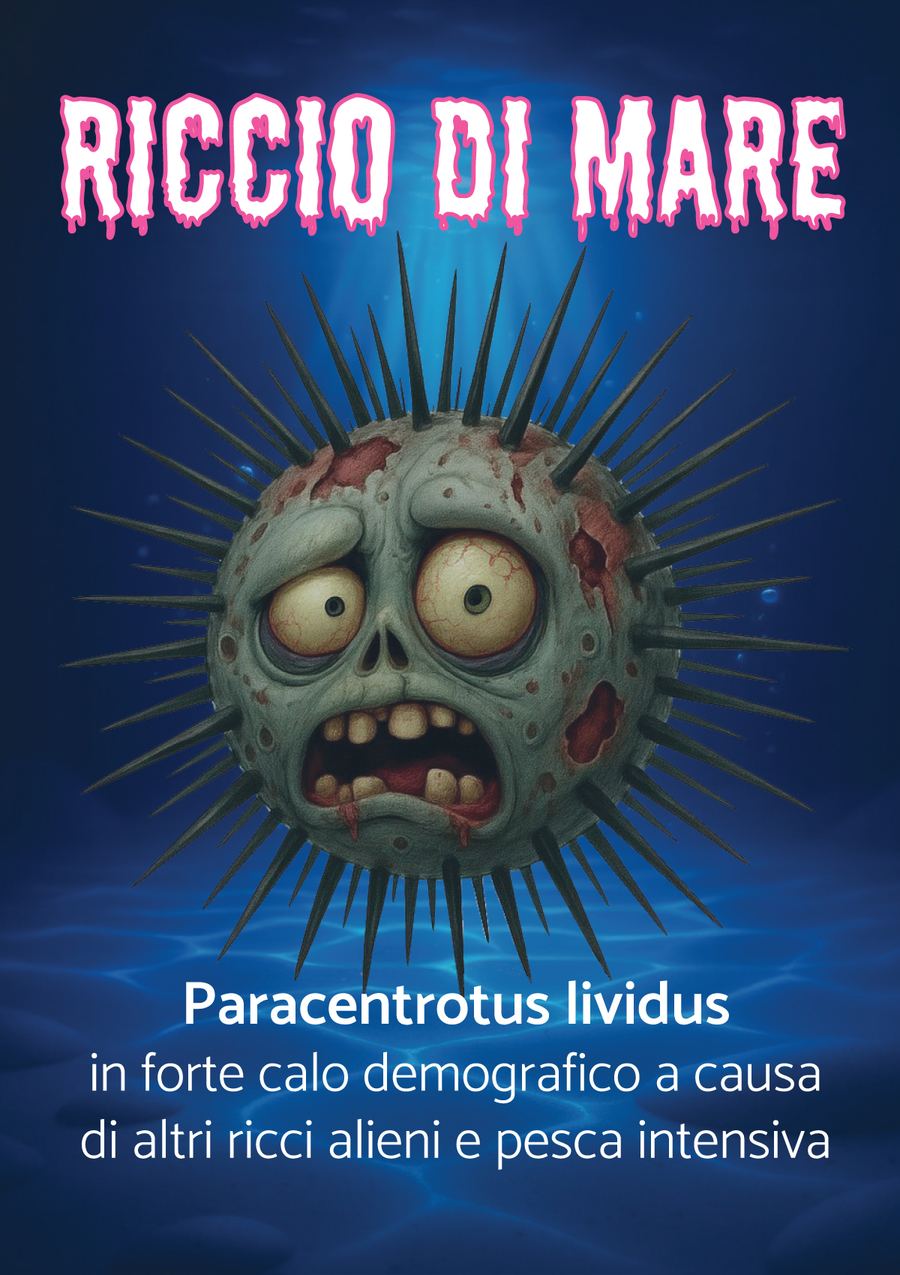
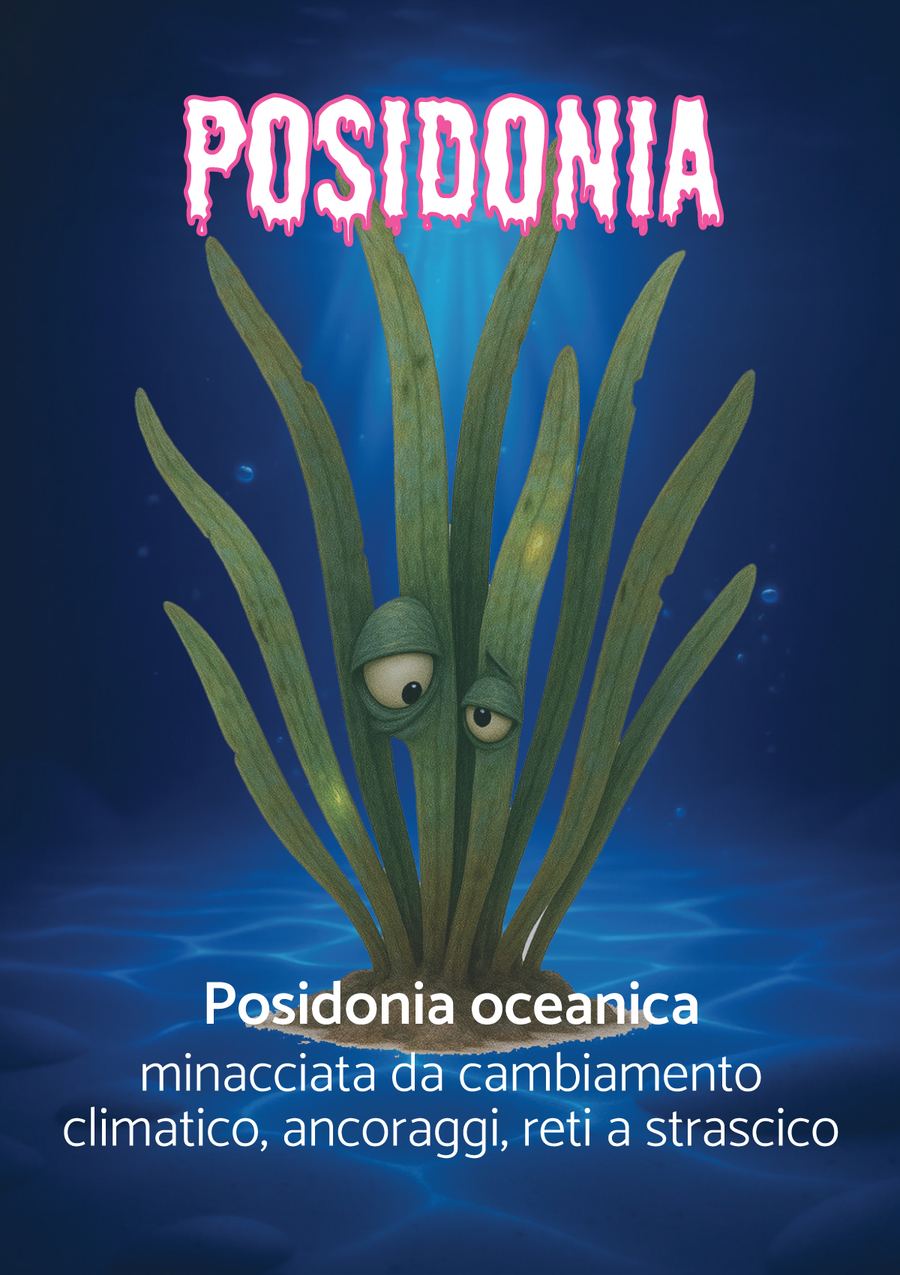
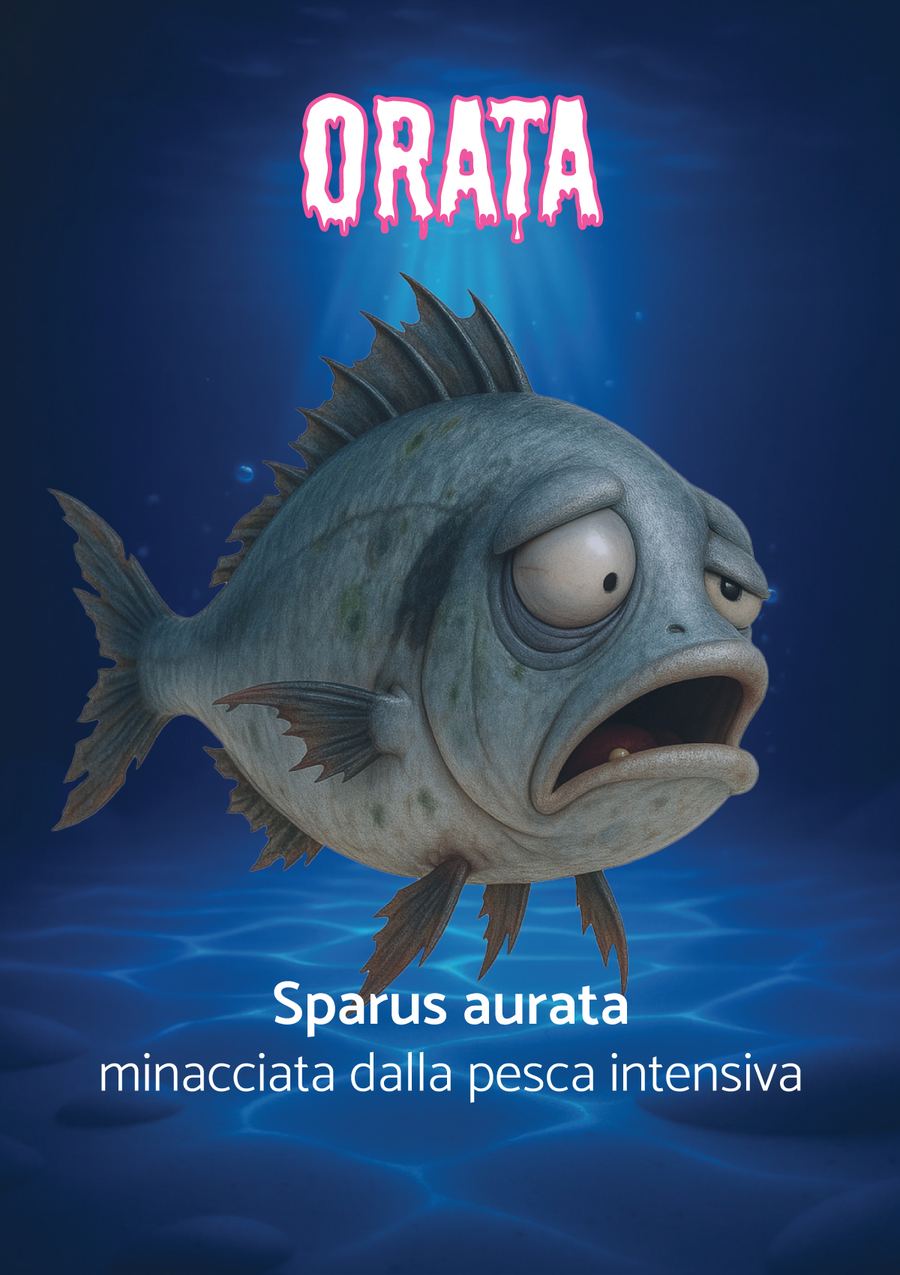
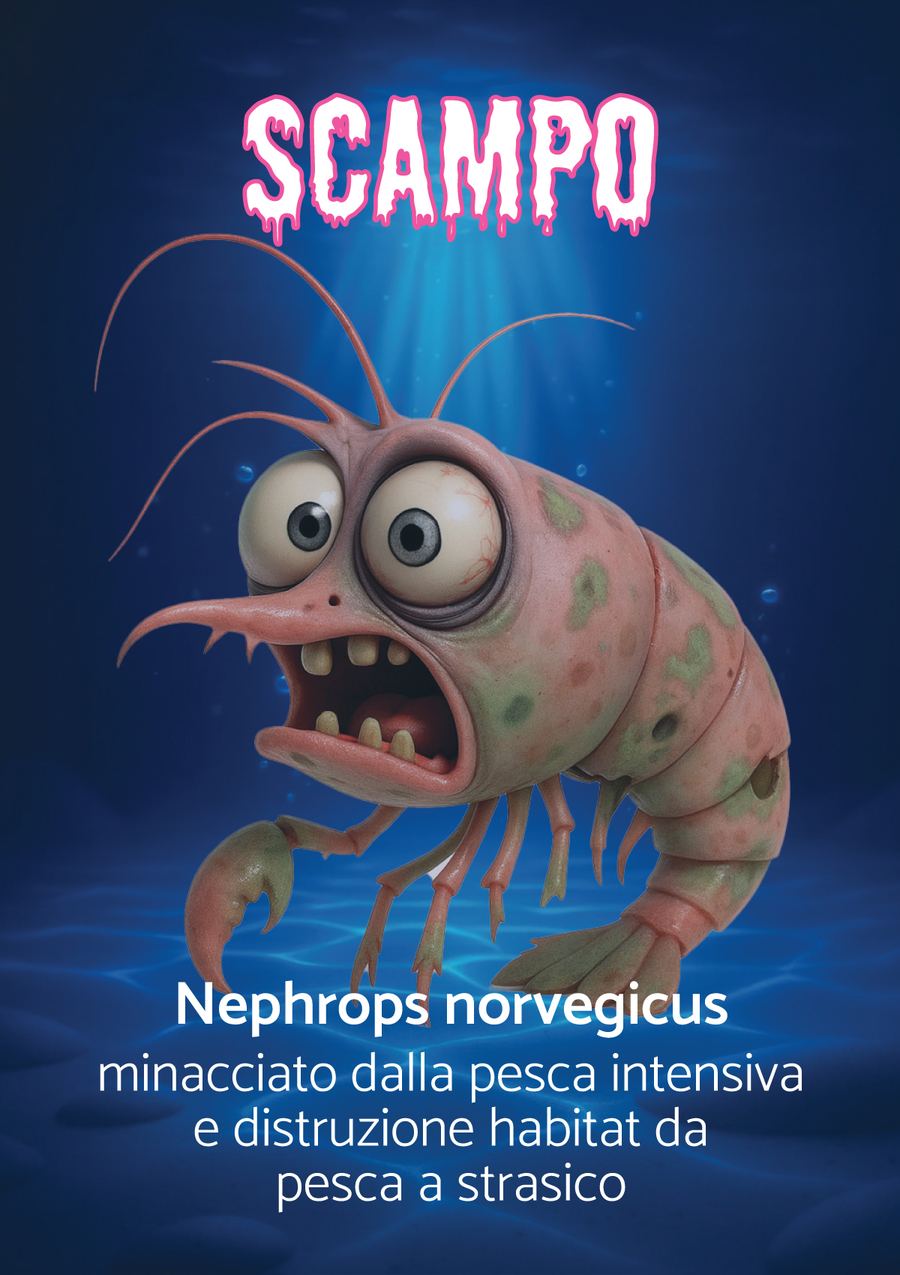
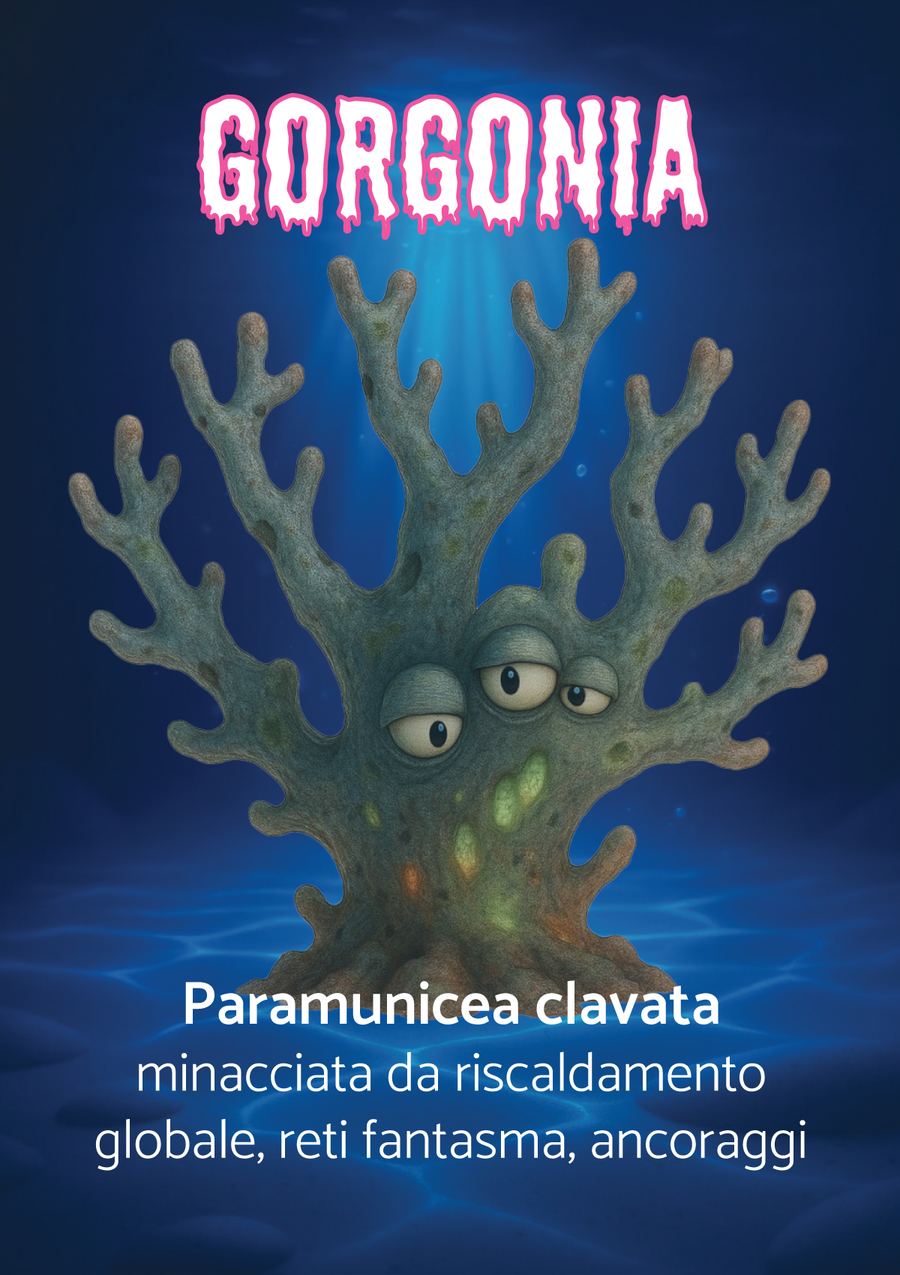
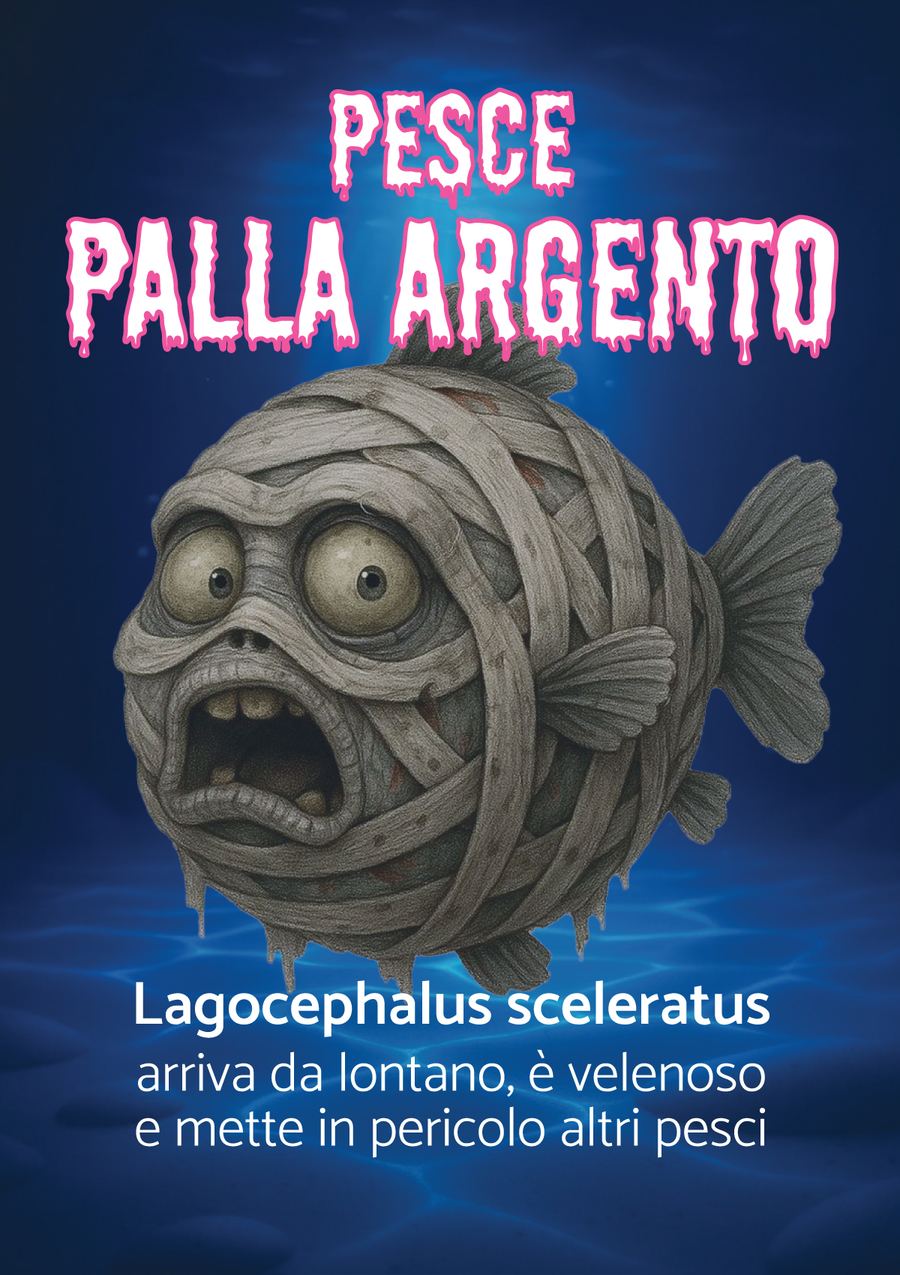
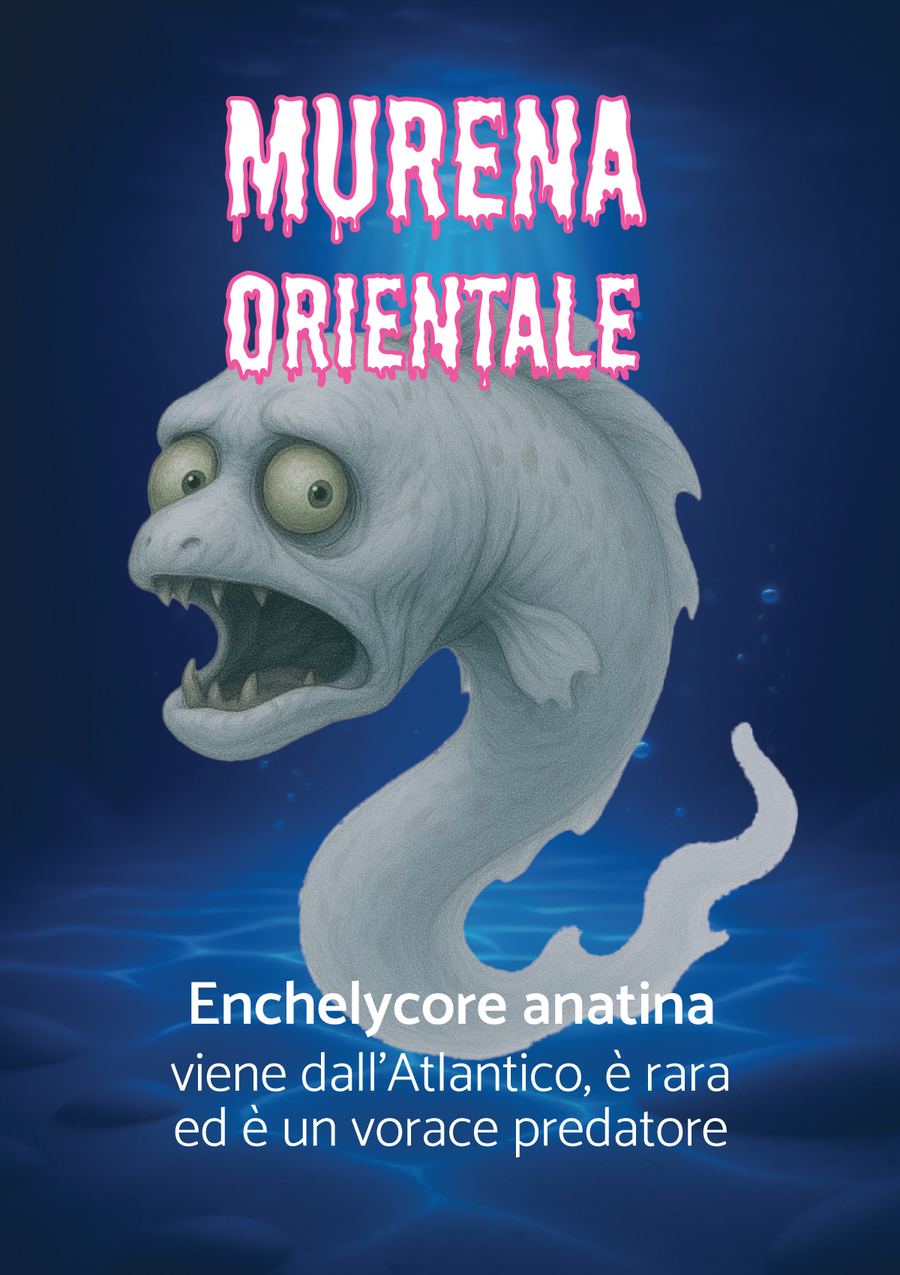
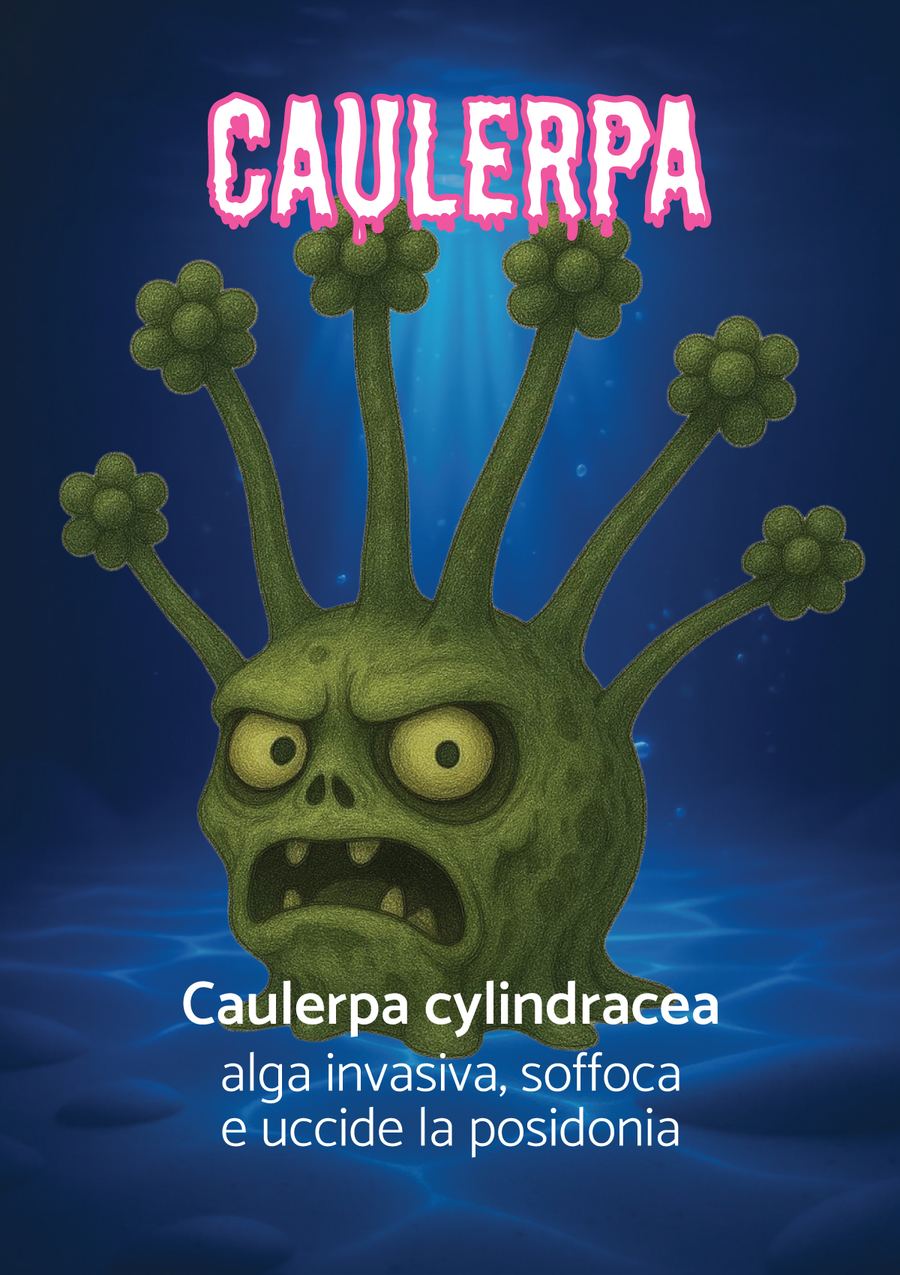
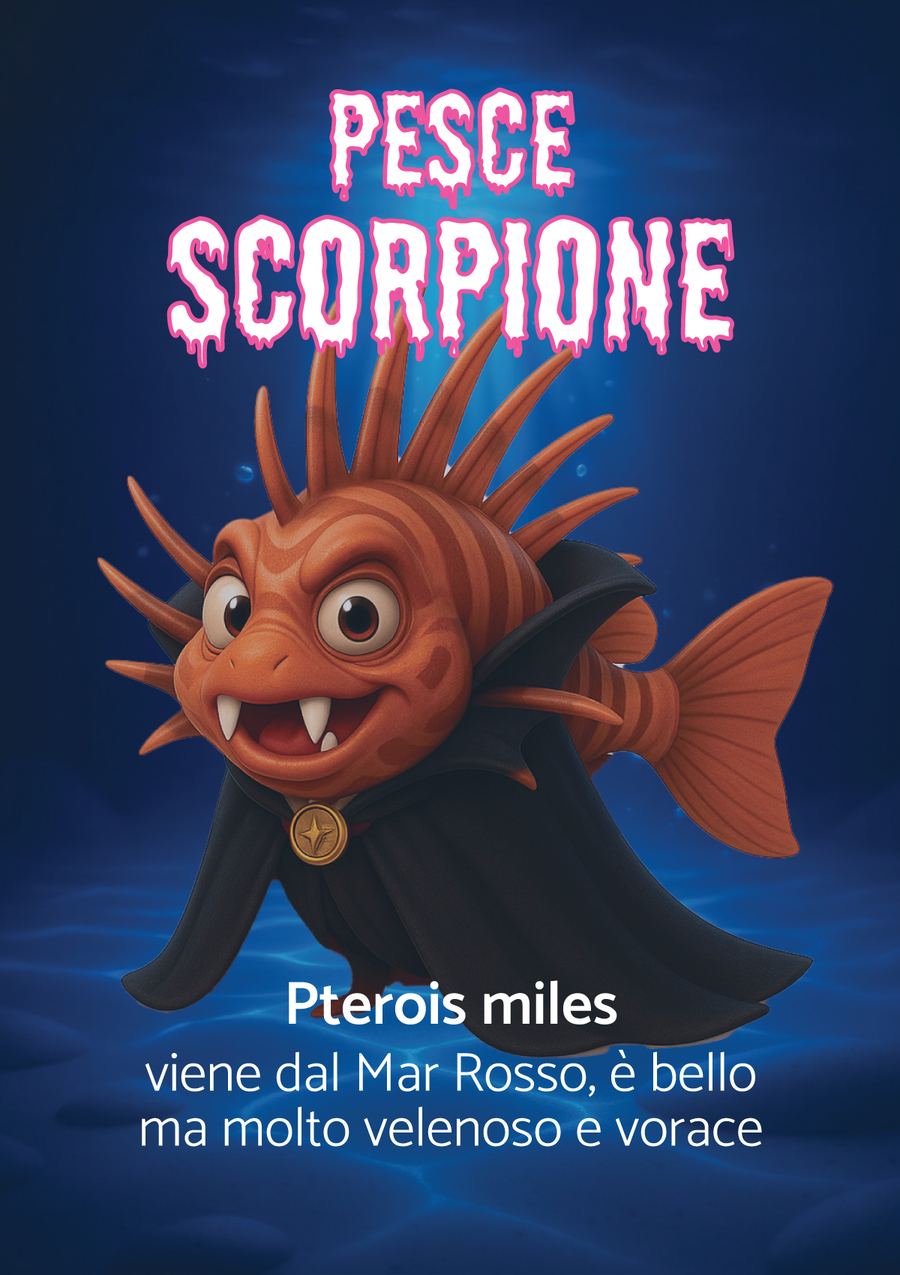
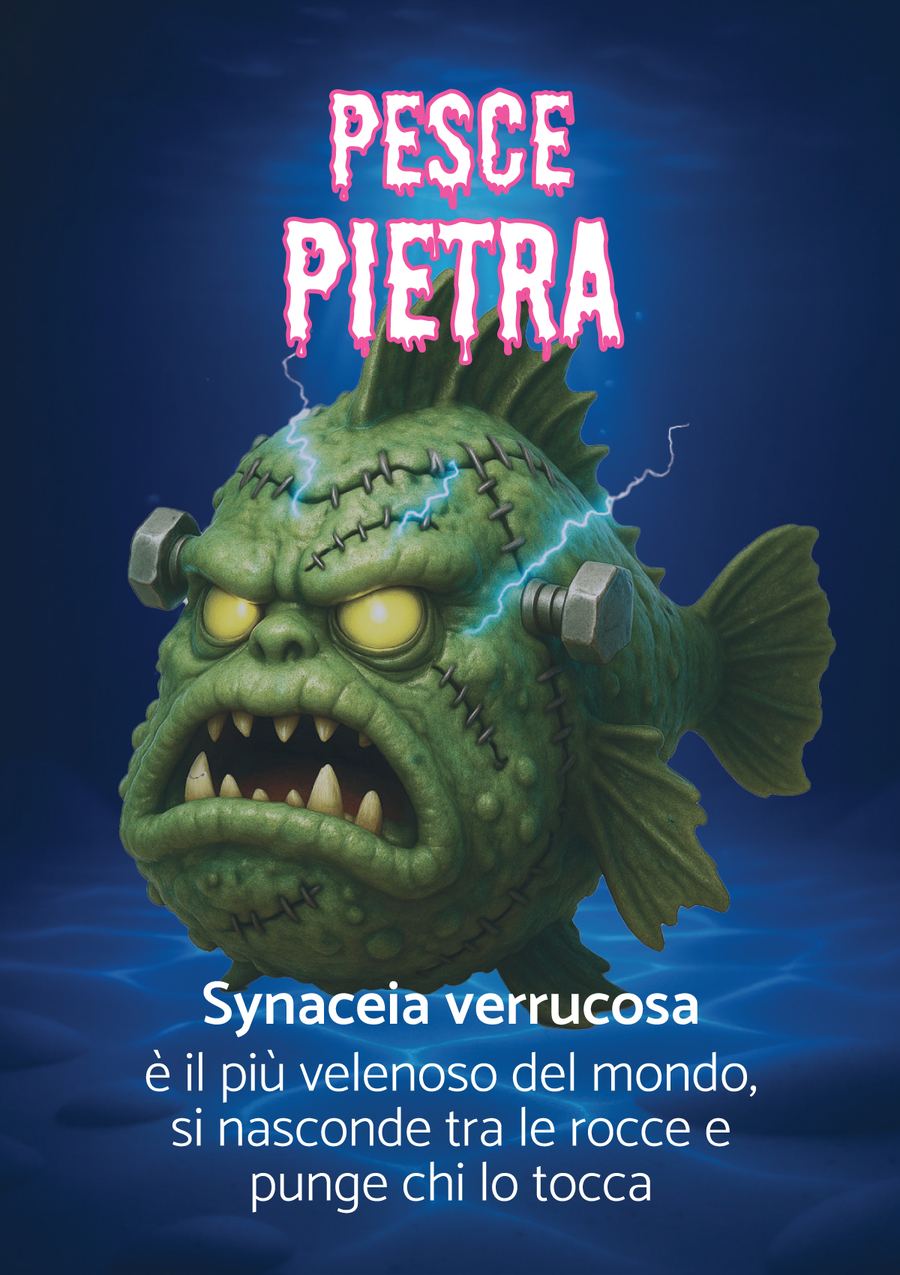
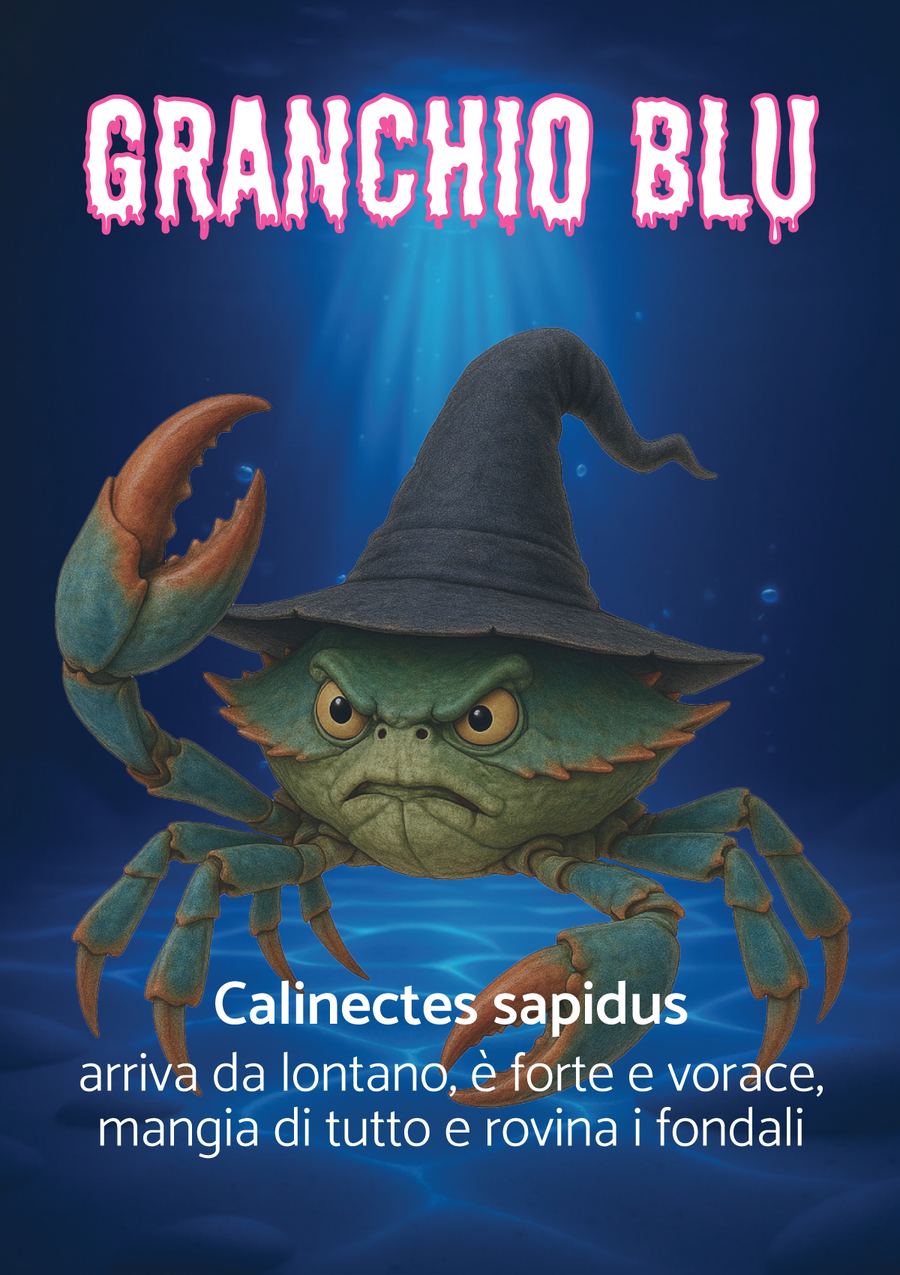
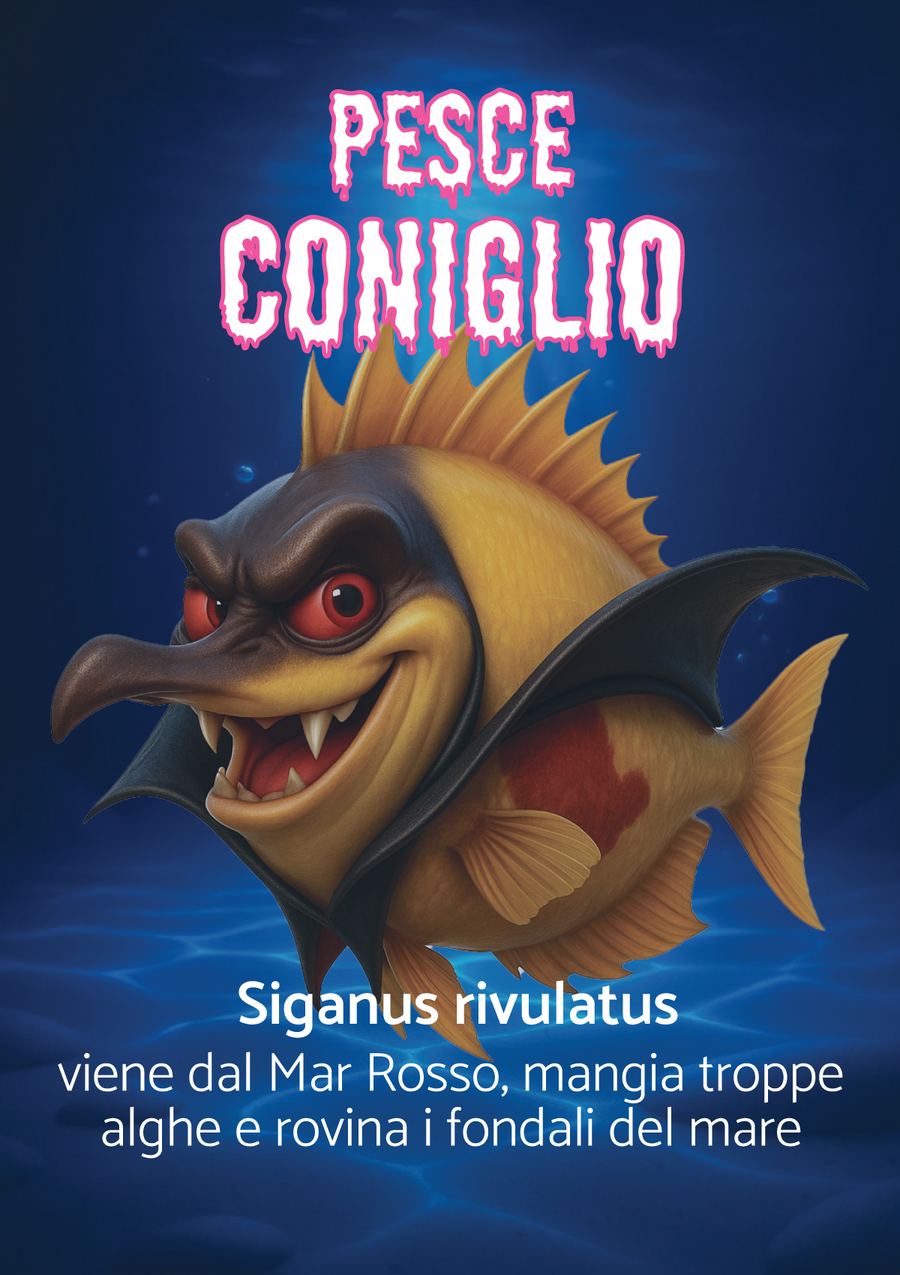
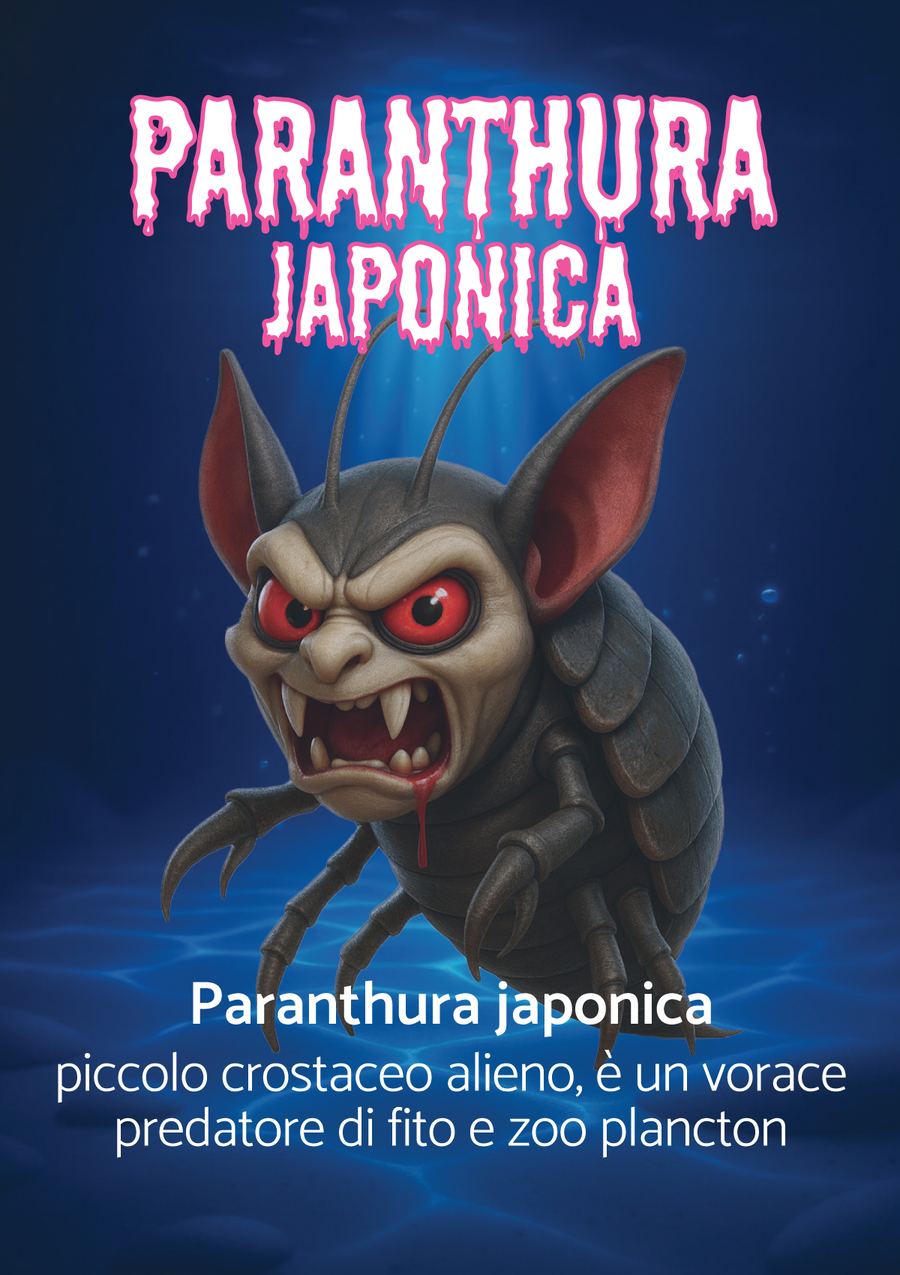
For the occasion, a series of illustrated cards was created: the zombie fish — species suffering in the Mediterranean — and the monster fish — alien species harming local ecosystems. The cards were hidden inside the "pentolaccia del mare" alongside sweets: a papier-mâché shape that the children broke open, releasing a playful educational surprise about the sea along with the candy.
The celebration was accompanied by "Posidonia Ah Ah Ah", a song written and composed especially for the occasion.
"Caring for the sea can begin with joy and imagination."
Chapter 03 — Workshop & Public Presentation
BLUE DISTRICT, GENOVA
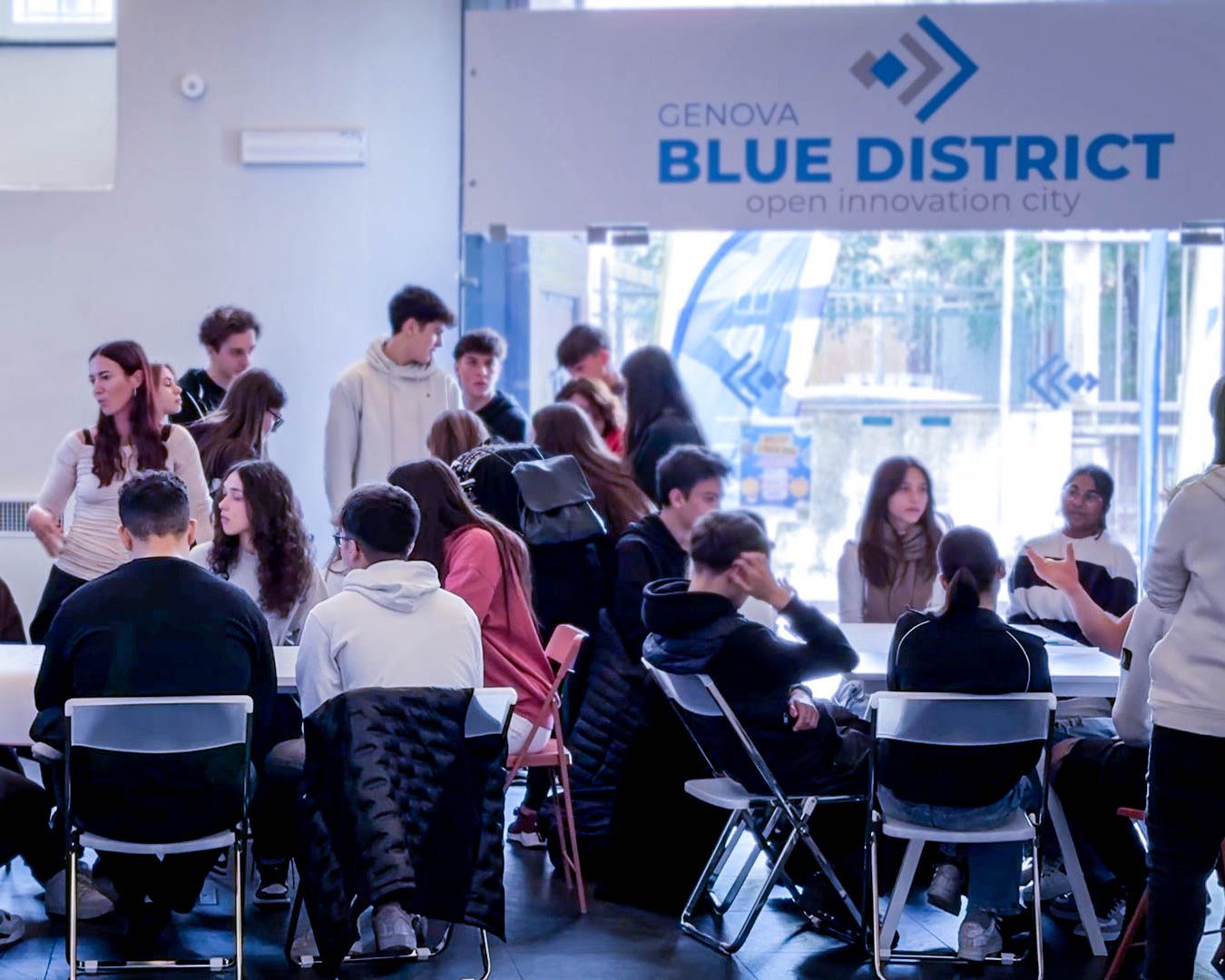
The Genova Blue District hosted both a workshop session and the public presentation of the project, marking a crucial step in its development.
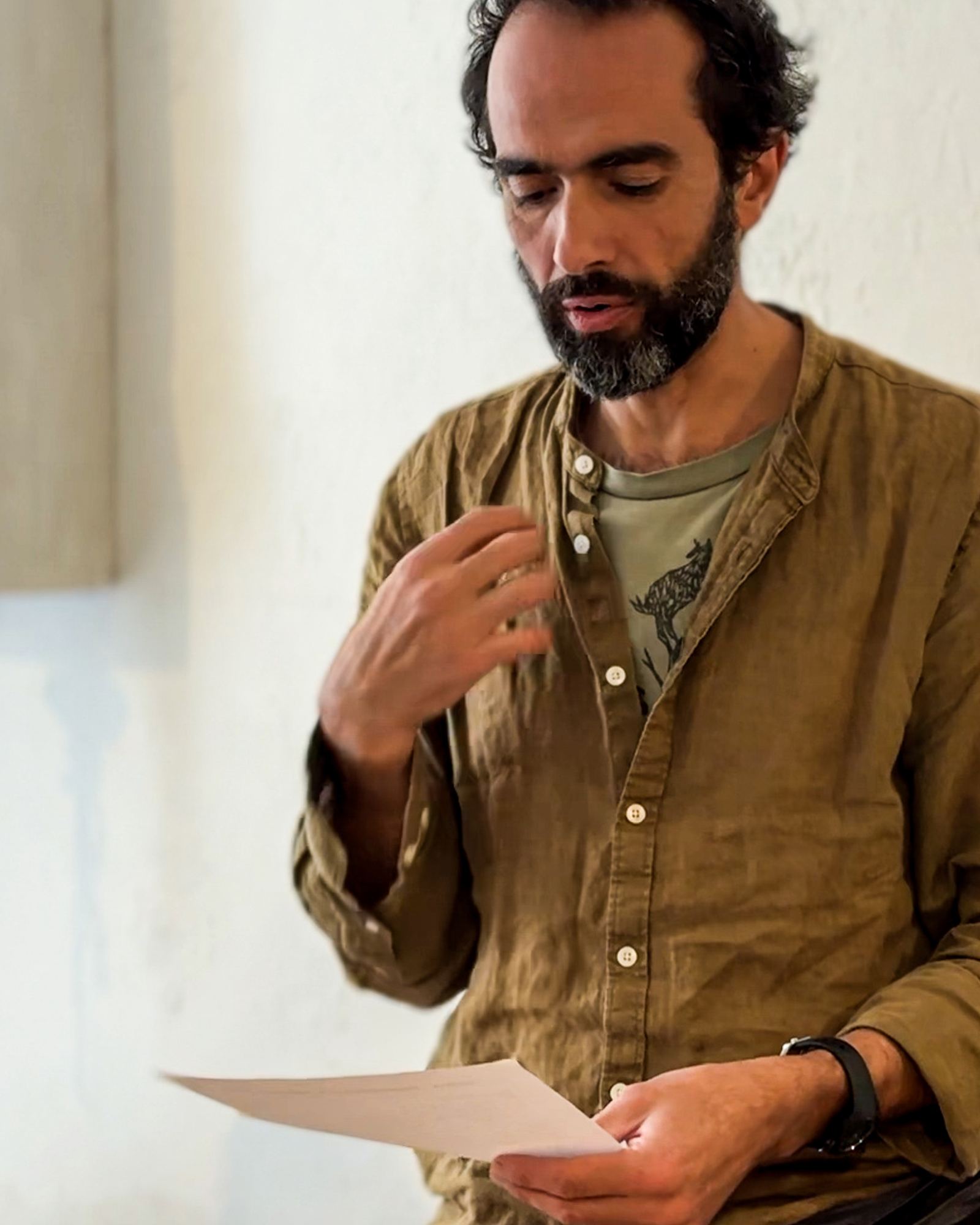
During the morning, we ran a hands-on workshop with around 80 high school students from artistic and scientific backgrounds. Rather than a traditional lecture, the session became an open dialogue. Through guided activities, students explored how art can generate ecological awareness and how the form of a marine sculpture can become habitat. Ideas circulated quickly — bold, symbolic, imaginative.
In the afternoon, the space opened to the public for a presentation attended by citizens, professionals, and sea lovers, who gathered to reflect on the relationship between biodiversity, participation, and artistic responsibility.
It was during one of these exchanges that the defining intuition emerged — from a 16-year-old participant.
"The defining intuition emerged — from a 16-year-old participant."
Chapter 04 — Field Survey
SEABED SURVEY, BOGLIASCO
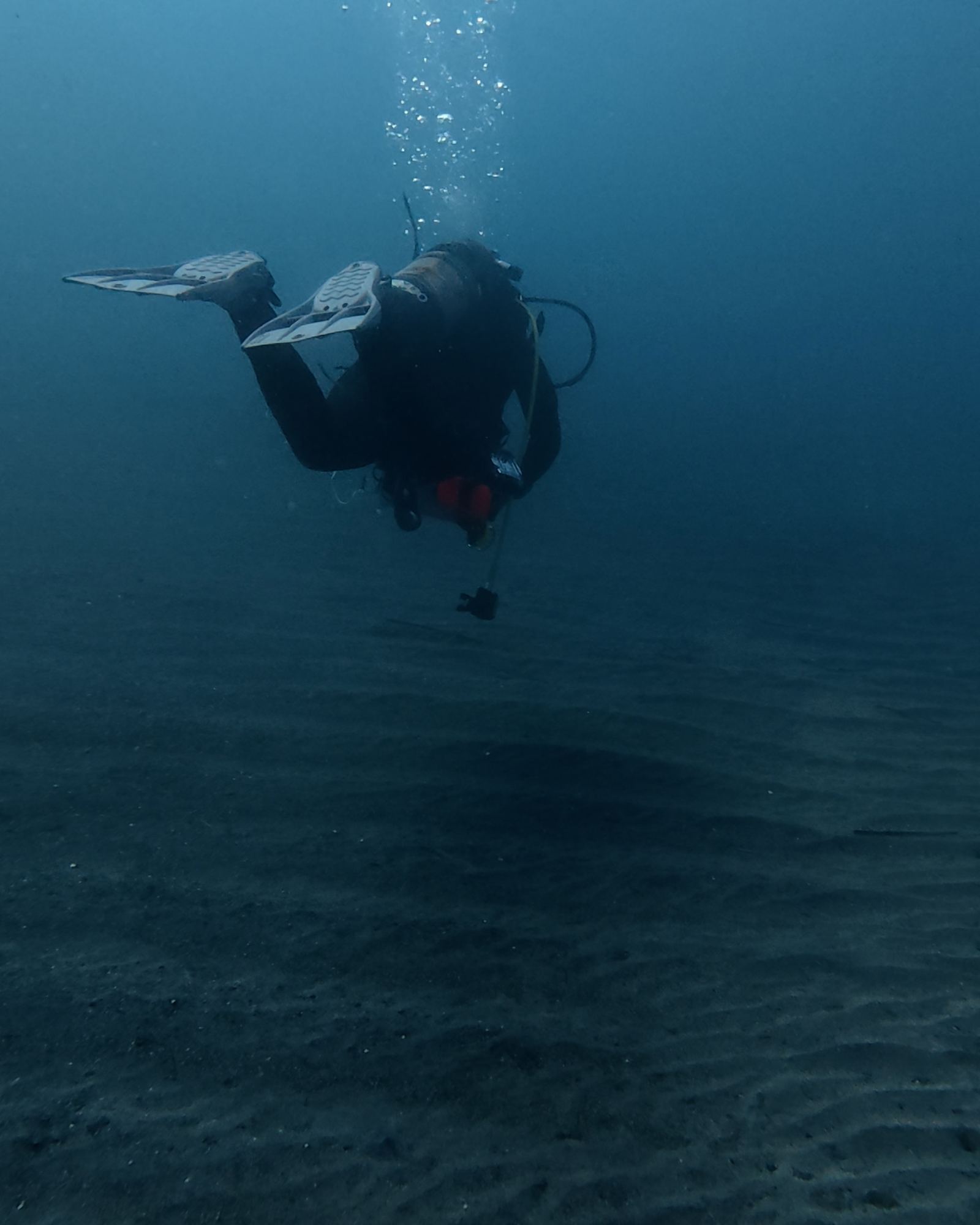
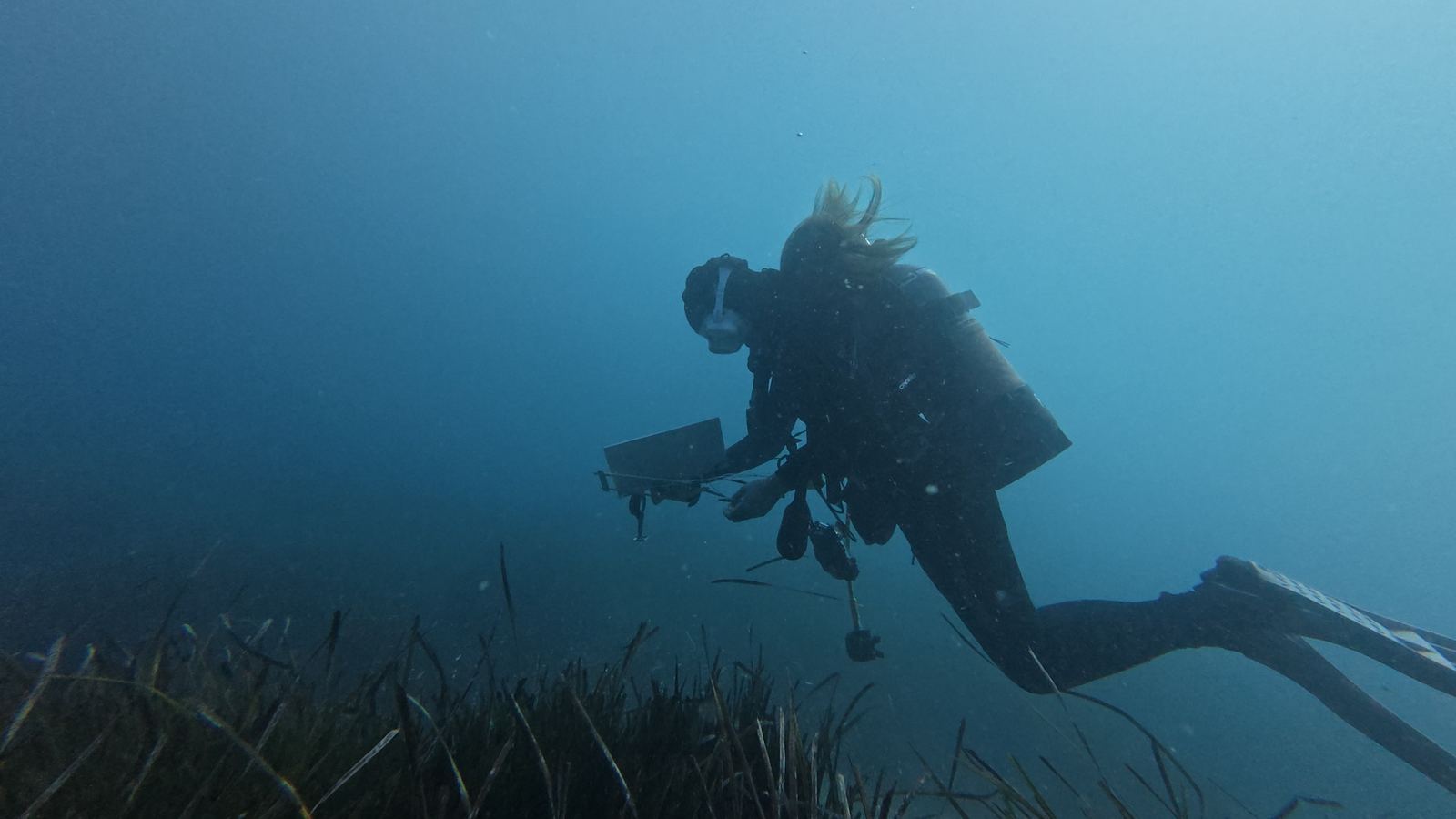
Before any workshop or meeting, we went to sea. A small crew set off from the harbour to explore the area where the sculpture would be installed. We mapped the seabed, measured depths, and recorded visibility, currents, and seabed composition.
The objective was to find a site suitable for marine life to settle and grow — and, crucially, not to install the sculpture on top of Posidonia oceanica, but nearby, on a sandy seabed. The location identified lies in front of the Pontetto area of Bogliasco.
The survey was conducted in collaboration with the University of Genoa, whose marine biology team confirmed that the site meets the required ecological standards and complies with European regulations protecting Posidonia oceanica meadows.
"A site fit for marine life — close to the Posidonia meadows, but not above them."
The monitoring does not stop at installation. Public observations and photographs collected on the seabed will contribute to a citizen science project through Minka — the research continues, open to anyone who wants to take part.
Chapter 05 — Digital Design
3D ENVIRONMENT
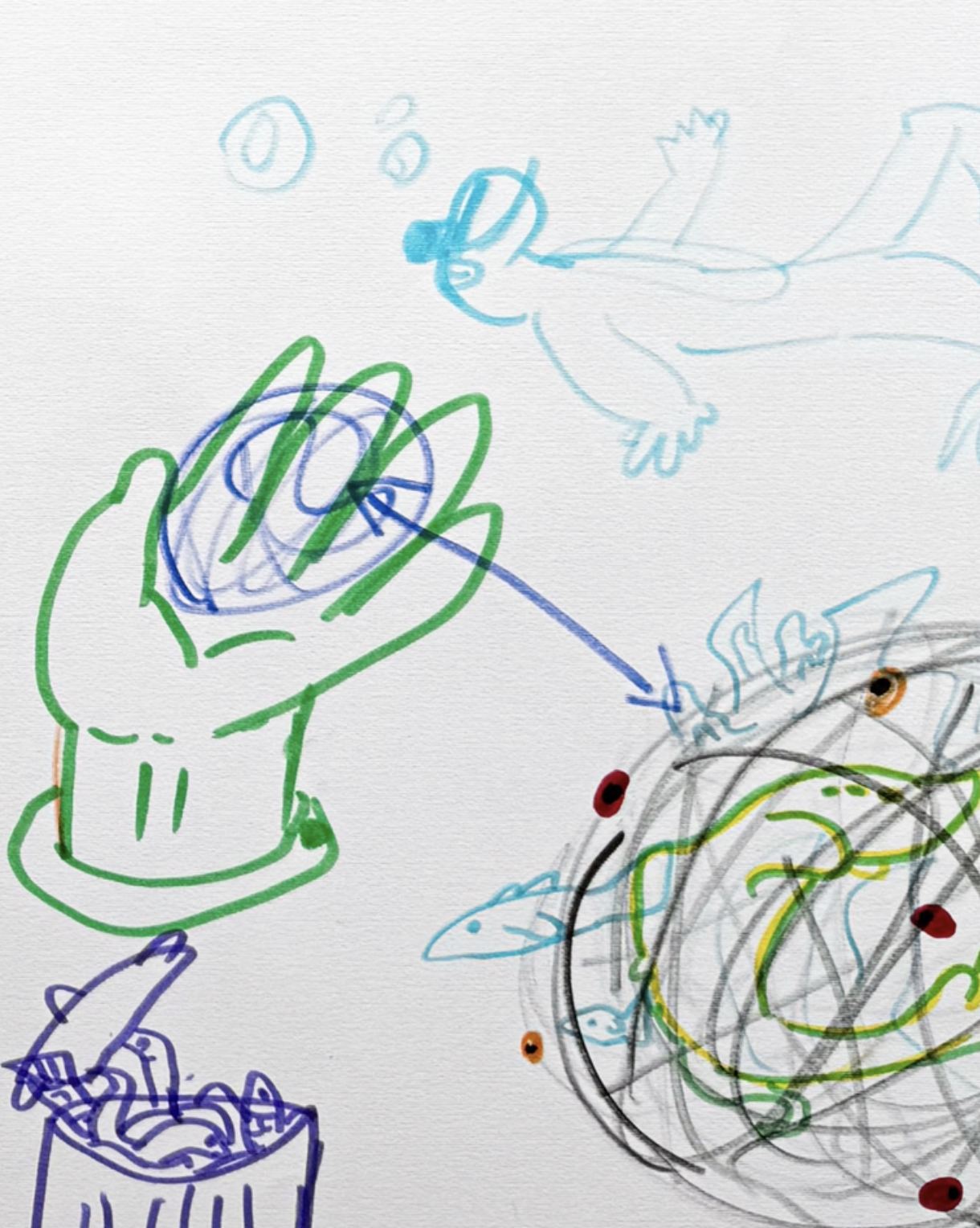
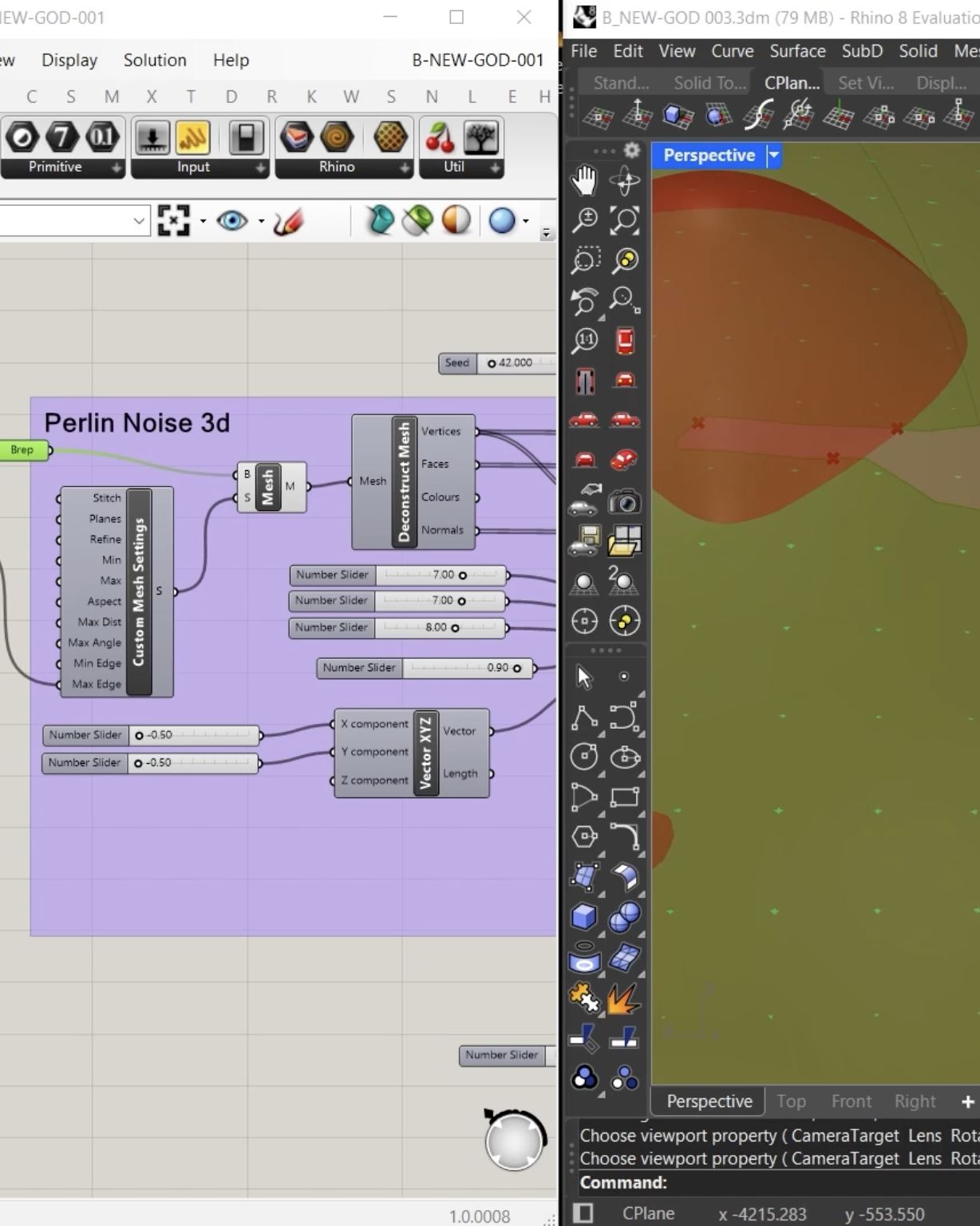
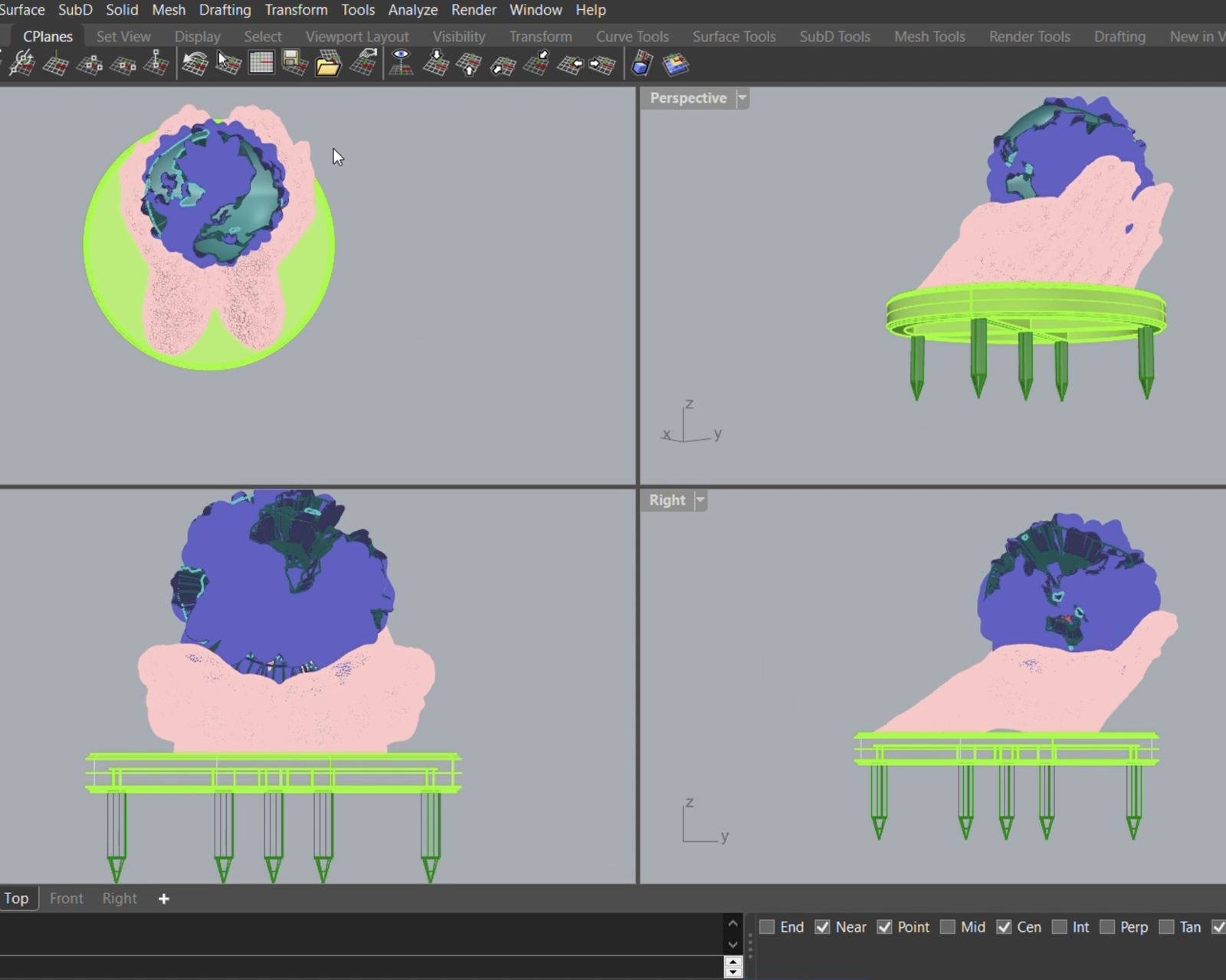
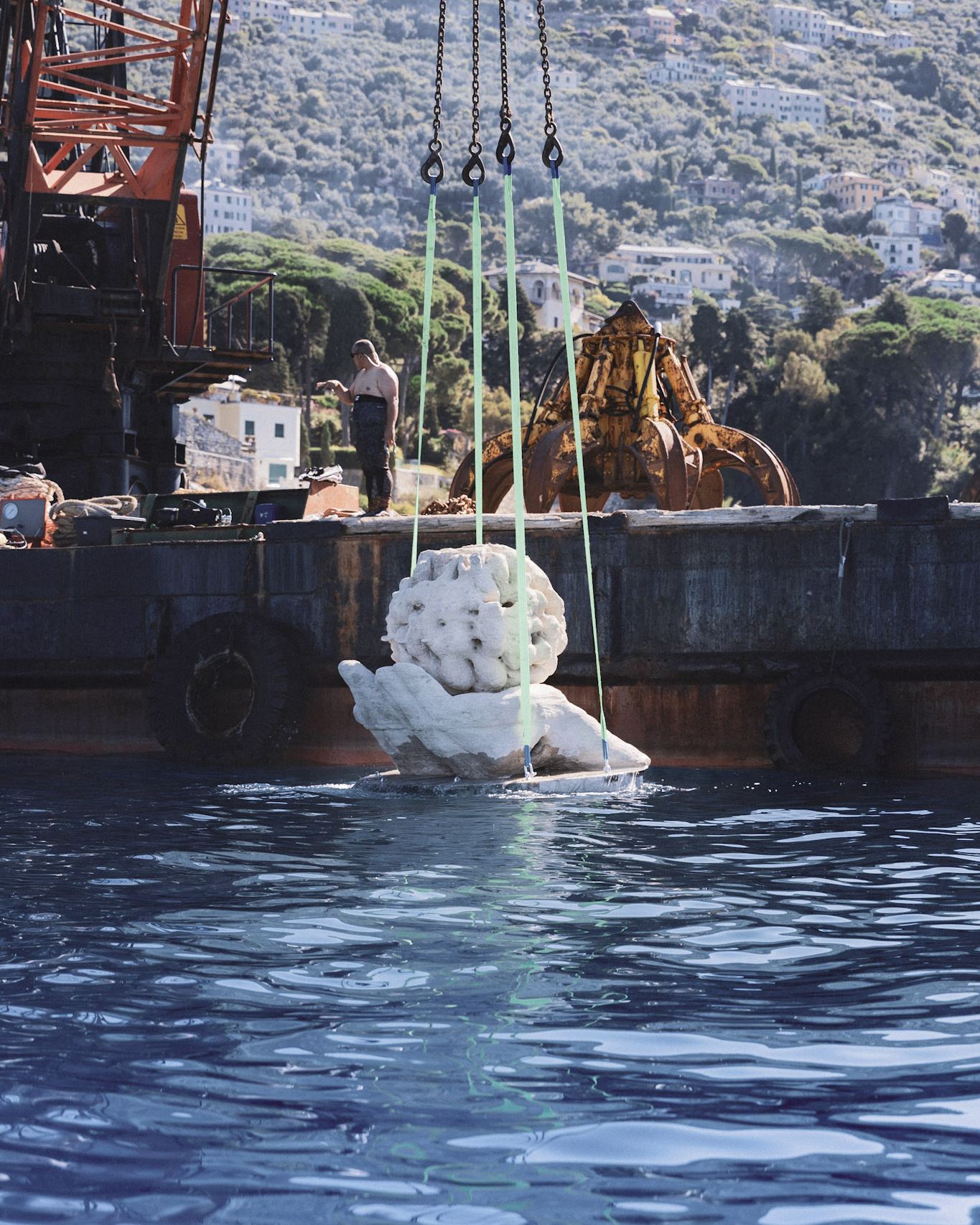
Once the concept was defined, the work moved into the digital realm. The sculpture began with a 3D scan of real hands, which were reconstructed and refined through digital modelling, becoming the structural base of the piece. The hands hold a regenerative structure shaped like the world.
The globe is intentionally perforated — carved with cavities, tunnels, and openings designed to host marine life. Each void becomes a potential refuge for fish, octopuses, and invertebrates.
The internal geometry was studied in relation to Mediterranean species, considering dimensions, swimming behaviour, and ecological function.
The sculpture is both symbolic and functional: two hands holding the planet — not as an abstract message, but as a living habitat.
"Two hands holding the planet — not as an abstract message, but as a living habitat."
Chapter 06 — Production
D-SHAPE, PRINTING THE STRUCTURE
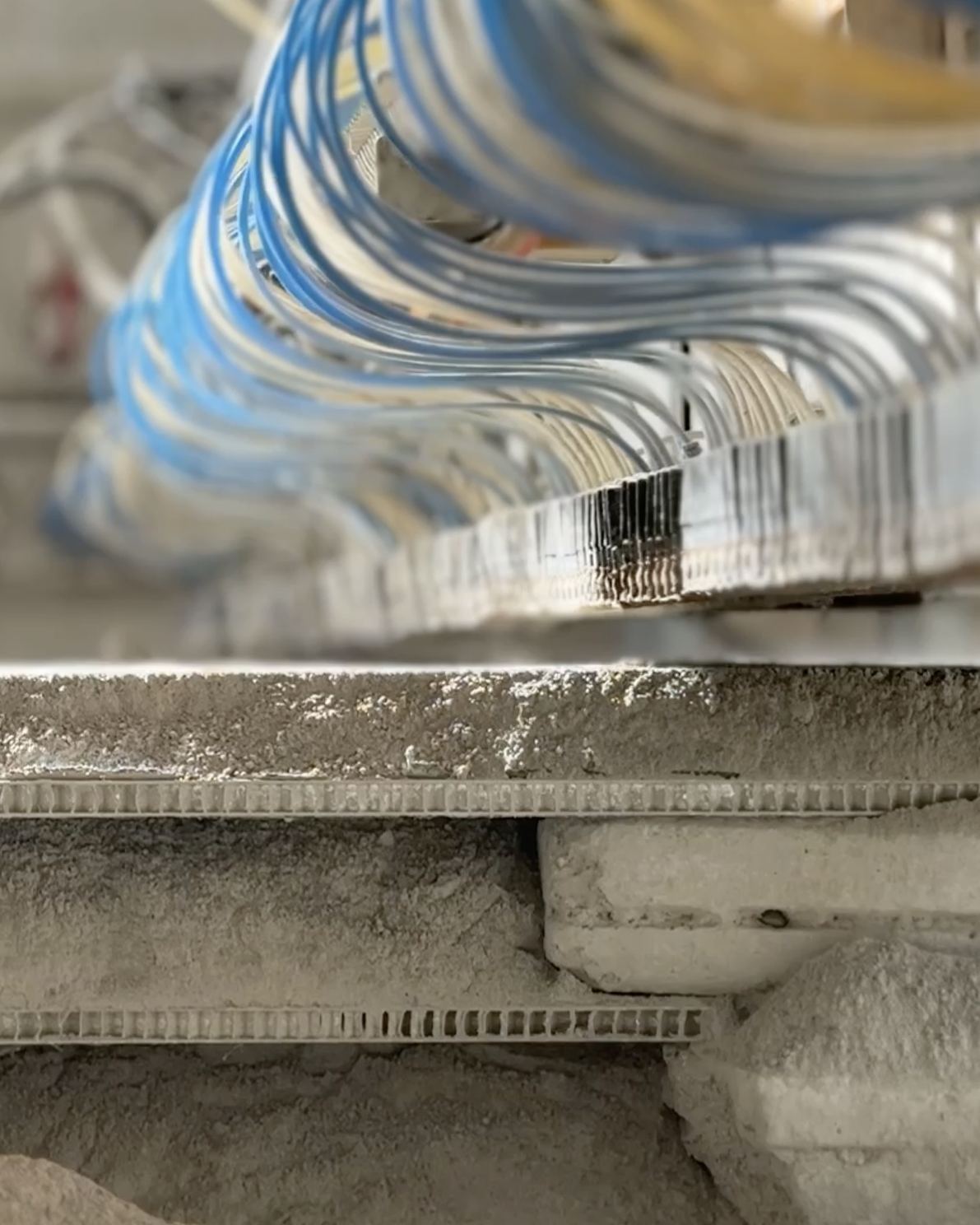
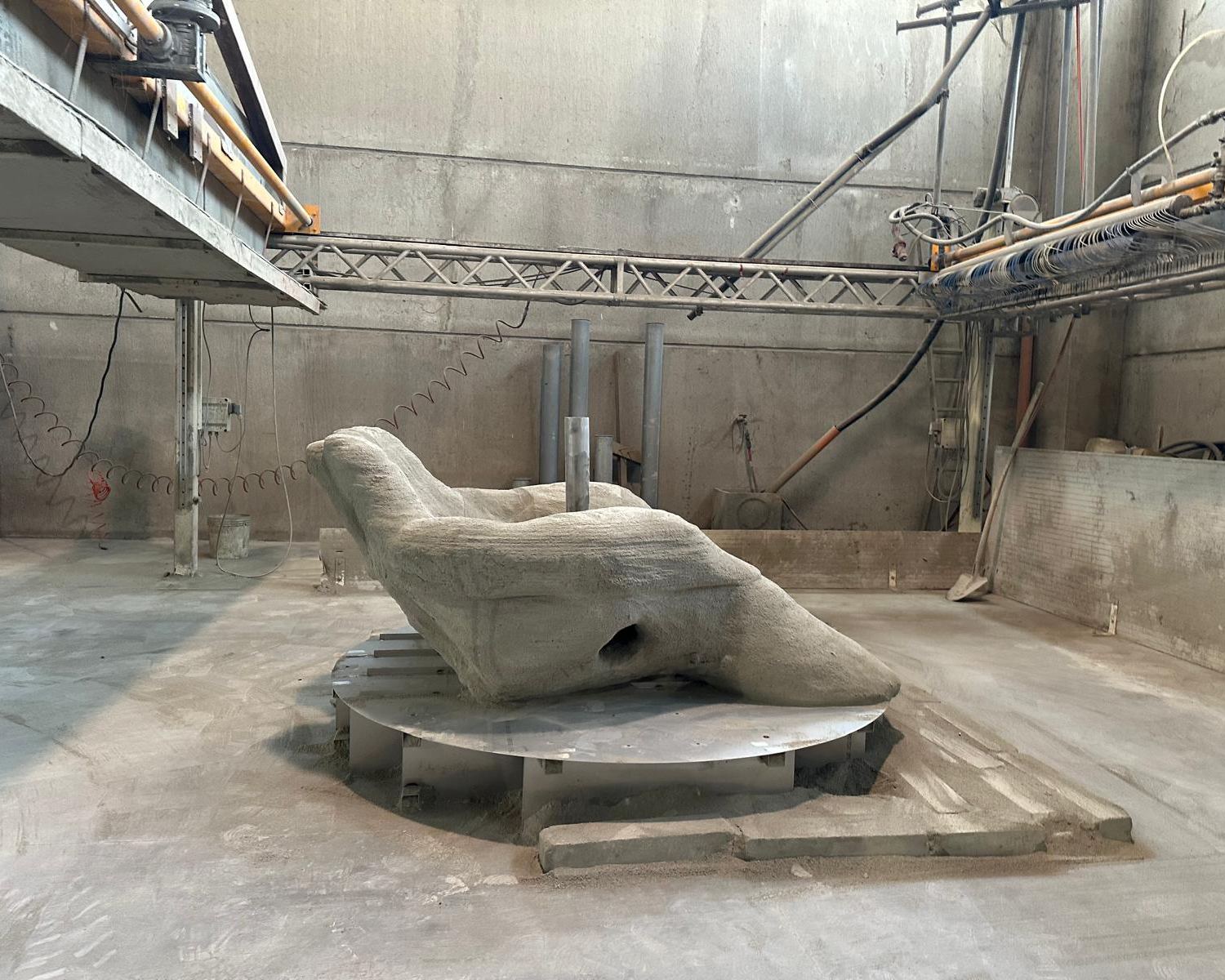
The sculpture was 3D printed by D-Shape in marine-compatible concrete, layer by layer. The additive manufacturing process allowed precise control over density, cavities, and structural stability, ensuring both durability and ecological sensitivity.
Unlike traditional casting, this method reduces material waste and makes possible the complex internal morphology needed for marine colonisation. What was once a shared idea in a workshop has taken physical form — layering, solidifying, and preparing to meet the sea.
"From a shared idea to its encounter with the sea."
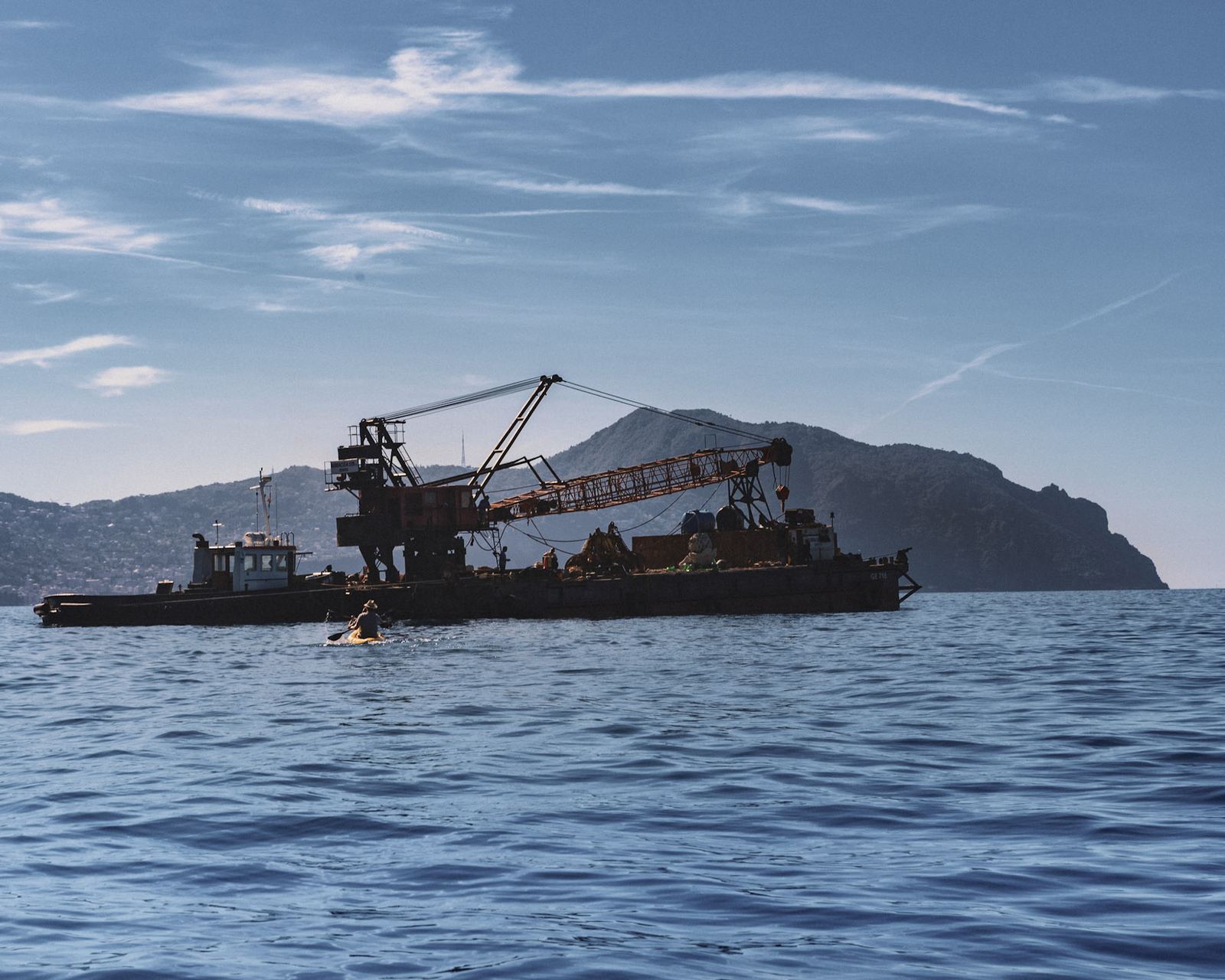
The day had finally come. The sculpture was transported by pontoon and lowered onto the seabed in the exact spot identified during the earlier survey.
The delicate operation of positioning and securing the piece underwater was carried out by Barracuda Sub divers, who handled every phase of the descent with precision and care.
On the surface, the event became a small collective celebration. Project participants and local citizens arrived by boat and canoe to witness the installation, turning a technical operation into a shared moment for the community that had followed the project from its first steps.
"By boat and canoe, to witness the installation."
The sculpture was donated to the Municipality of Bogliasco, becoming a permanent part of its coastline and marine heritage. The installation was covered by local and national press, marking a significant milestone for Posidonia Art Reef.
A Project, A Sea, A Community
THE BEGINNING OF A LIVING STRUCTURE
This has been a long and beautiful participatory journey — from the first sketches on paper to a sculpture now resting on the seabed off Bogliasco. Every step, from the workshops to the installation, was shaped by the people who took part in it: students, families, divers, sailors, citizens, scientists, and artists, each adding their own voice to the same story.
The structure has now begun its own underwater life. What was once an idea is becoming a habitat — and the story continues to unfold, both above and below the surface.
The structure is open to the community as a research tool too. Photos and observations collected by the public on the seabed will contribute to a citizen science project through Minka, helping to monitor the marine life settling around the sculpture.